The Rhino Report: Horned Beasts
“Rhinoceros” means “nose horn,” which is quite apt for the behemoths- or at least the living ones! Related to the tapirs and horses within Perissodactyla, these large herbivores are among the most iconic alive today. Despite their outward toughness, though, rhinos are a vulnerable group due to poaching and habitat destruction. Four of the five species alive today are at minimum vulnerable, with three of them being critically endangered. Beyond these five extant species, some famous prehistoric species include the Elasmotherium, woolly rhino, and Merck’s rhino.
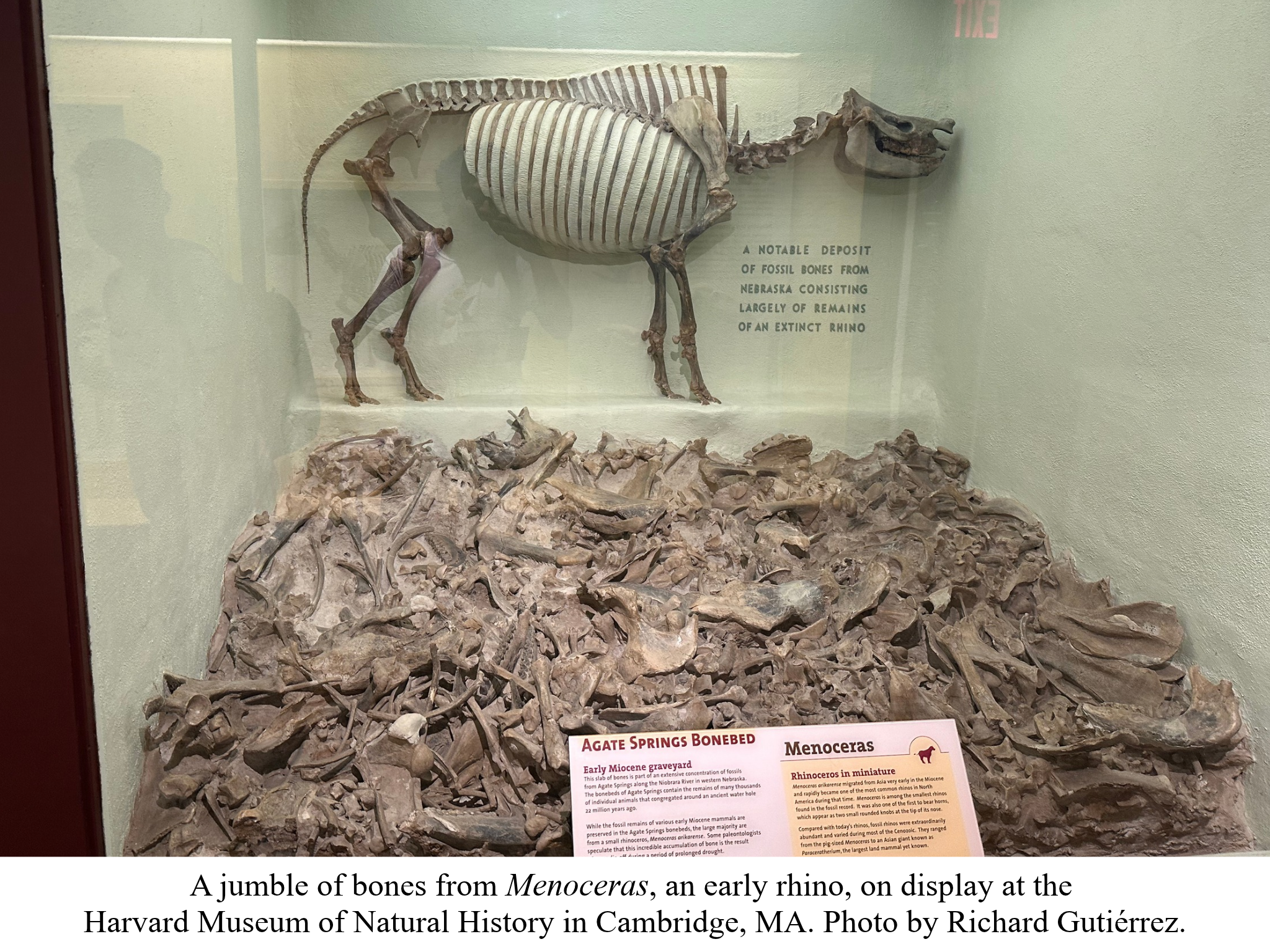
Rhinocerotoidea as a superfamily (a broader taxonomic level than family) is highly diverse. As perissodactyls, they have an odd number of load-bearing toes. Specifically, the group has three load-bearing toes. What sets rhinocerotoids apart from other animals are specific features in their teeth and skull bones. Modern rhinos all also have horns, though some extinct members of the superfamily were lacking such adornments.
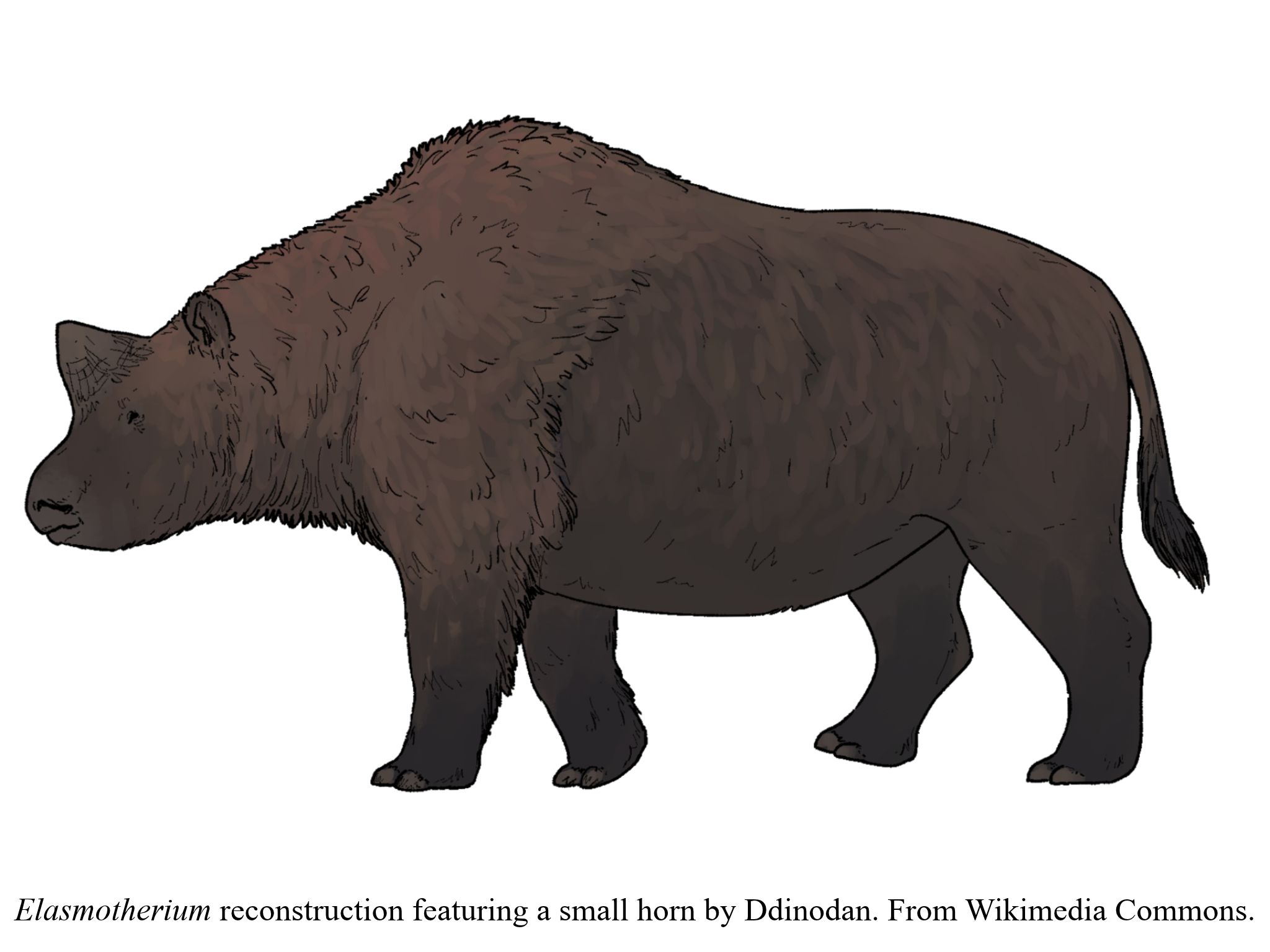
Skipping over to the true rhinos, Rhinocerodontidae, we begin with a hairy beast that possibly possesses a giant horn. Elasmotherium is one of the most famous prehistoric rhinos, also known as the Siberian unicorn. However, this name may not be fully accurate. Its skull is equipped with a bony boss, which is traditionally associated with a long- sometimes depicted as extremely long- keratinous horn. More recent research from 2021 points to the thin nature of the boss as to why a long horn could not be supported. We may never know for sure since keratin does not generally fossilize, but I personally like the classic, long-horned view of the animal!
Aceratherium, an Asian Miocene rhino, has no such ambiguity. The prefix “a-” means “without” or “-less,” as in asymmetric. Since “cera” means horn and “-therium” means beast, this rhino’s genus name effectively translates to “hornless beast.” Unlike the Siberian unicorn, the Aceratherium skull lacks any indication of being able to support horn growth. It is not unique in this regard; in fact, it is the type genus of a whole family of mostly hornless rhinos, the aceratheres. However, it is important to avoid simply grouping any hornless rhino into the group. According to Lu, Deng, and Pandolfi in 2023, the family was long used as a wastebasket taxon for all hornless rhinos. The true distinguishing characteristics of the group include some notches in the nasal cavities and differences in its teeth and hand bones, among other features.
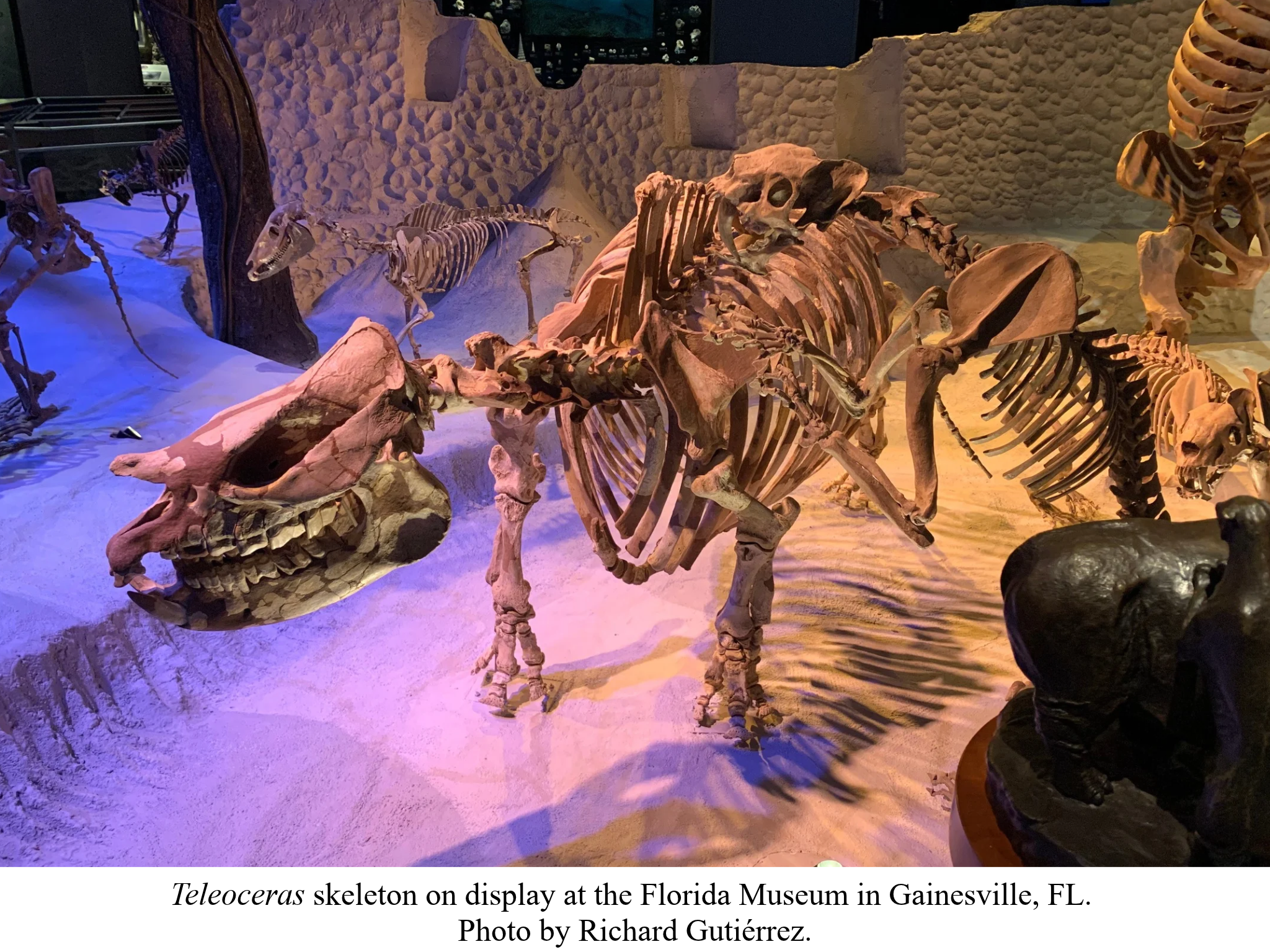
Teleoceras is also important to briefly mention as a North American rhino genus. Like Aceratherium, some species were hornless, but others had a small horn. Teleoceras and its relatives were interesting for their large bodies and stubby legs, looking more hippo-like than rhino-like! They also exhibited sexual dimorphism, where males grew to larger body sizes than the females.
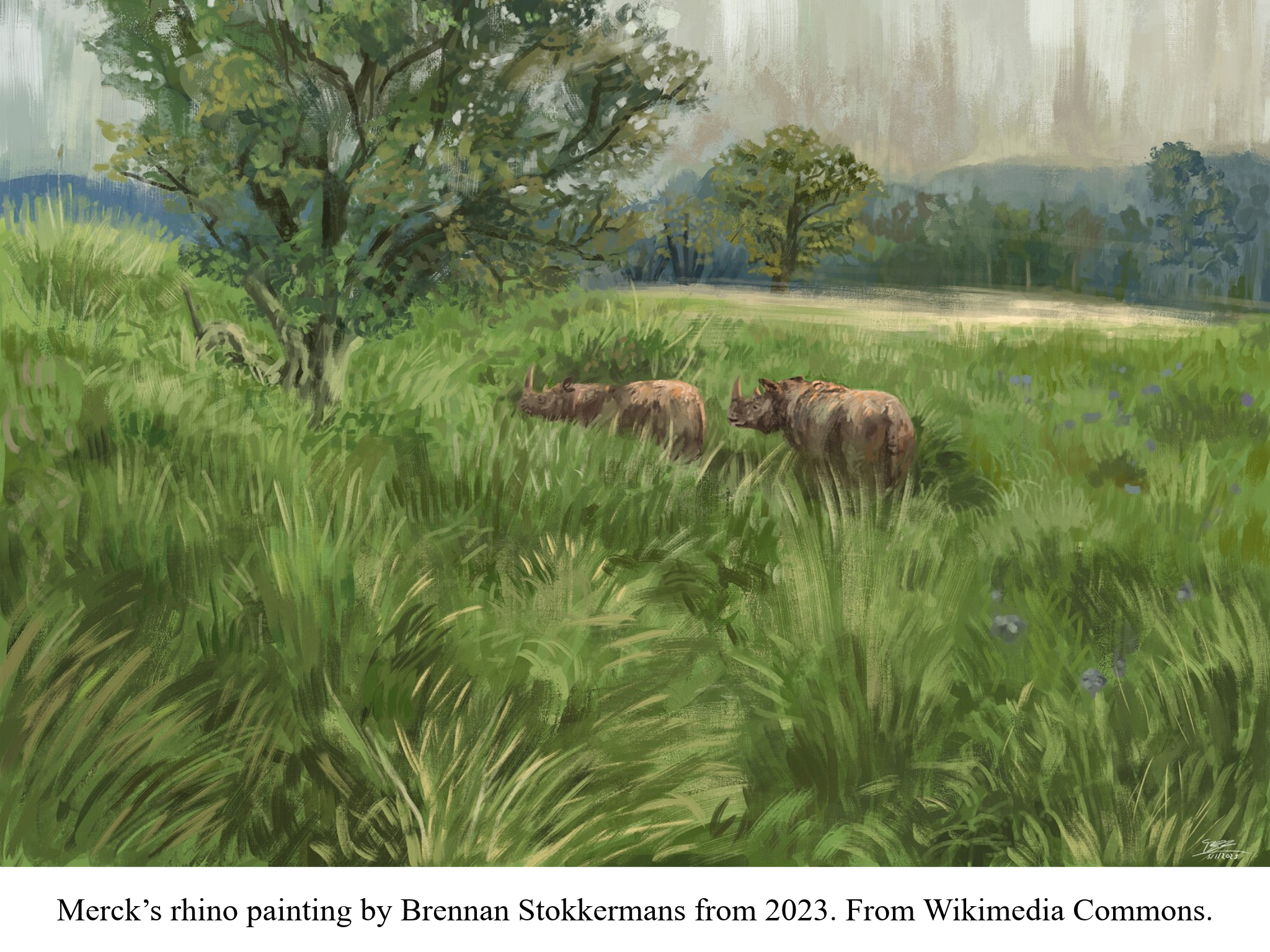
Merck’s rhinoceros, Stephanorhinus kirchbergensis, is another notable prehistoric rhino from Eurasia, where it lived for hundreds of thousands of years, reaching as far north as the northern portion of European Russia. According to the fossil pollen extracted from a fossil jaw, Merck’s rhino likely lived in forested land. Scientists know this because the pollen observed ties to the type of plants presently associated with those types of environments. Due to a changing climate and landscape (marked by the expansion of the sprawling, open mammoth steppe), Merck’s rhino may have been a victim of population fragmentation as forests dwindled. This phenomenon occurs when populations are physically split. In the case of Merck’s rhino, inbreeding and a lowering of genetic diversity may have occurred. The lack of genetic diversity can sometimes rapidly disseminate deleterious mutations or features, eventually causing extinction. This unfortunate event should not downplay the role of ancient humans; they likely exacerbated pressures by hunting the beasts. At one human site in what is now eastern Europe, Merck’s rhino bones were discovered with deep cut marks, indicating that they had cut the hide and meat. Some bones were even found burned, evidence of being cooked.
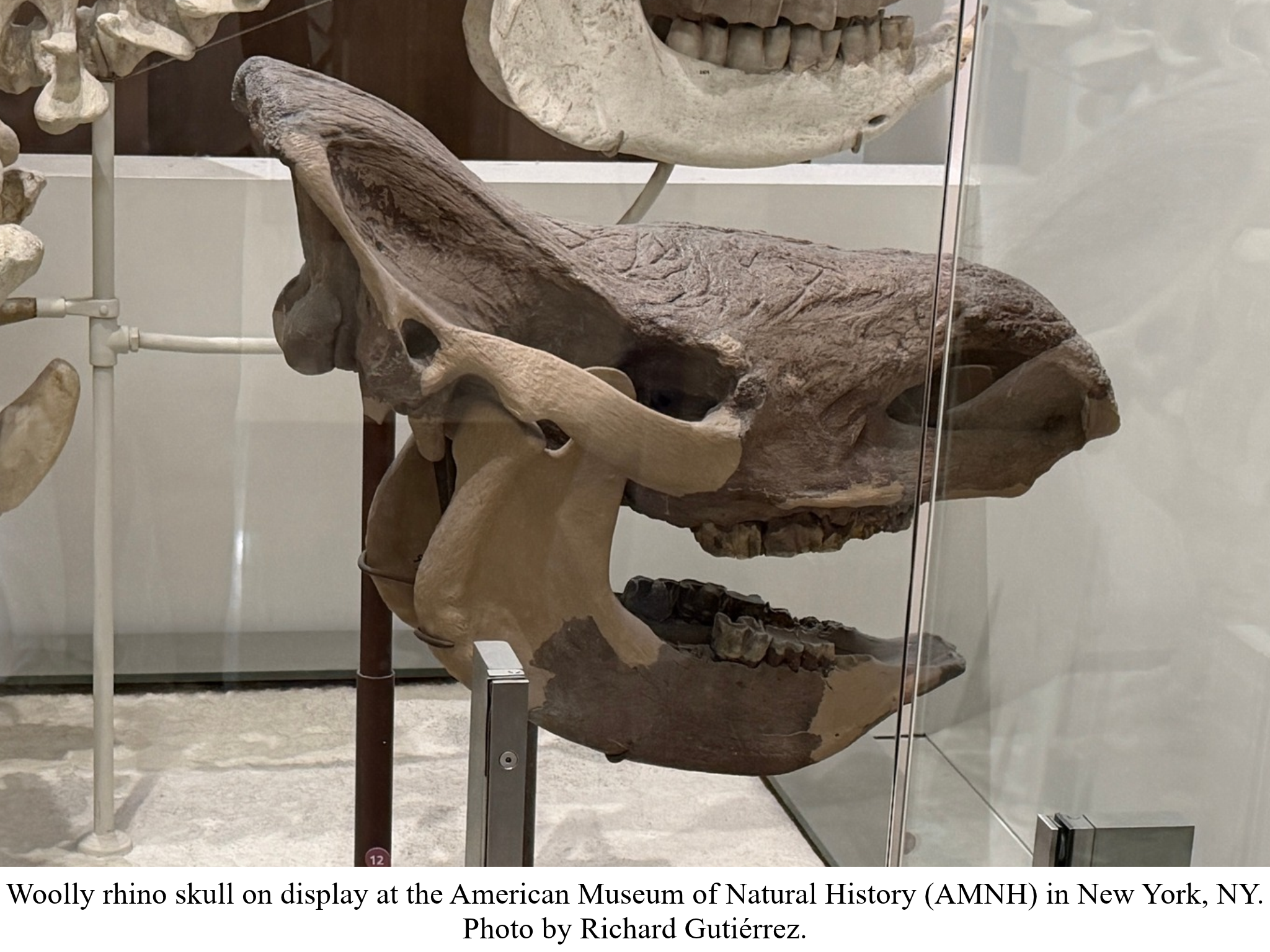
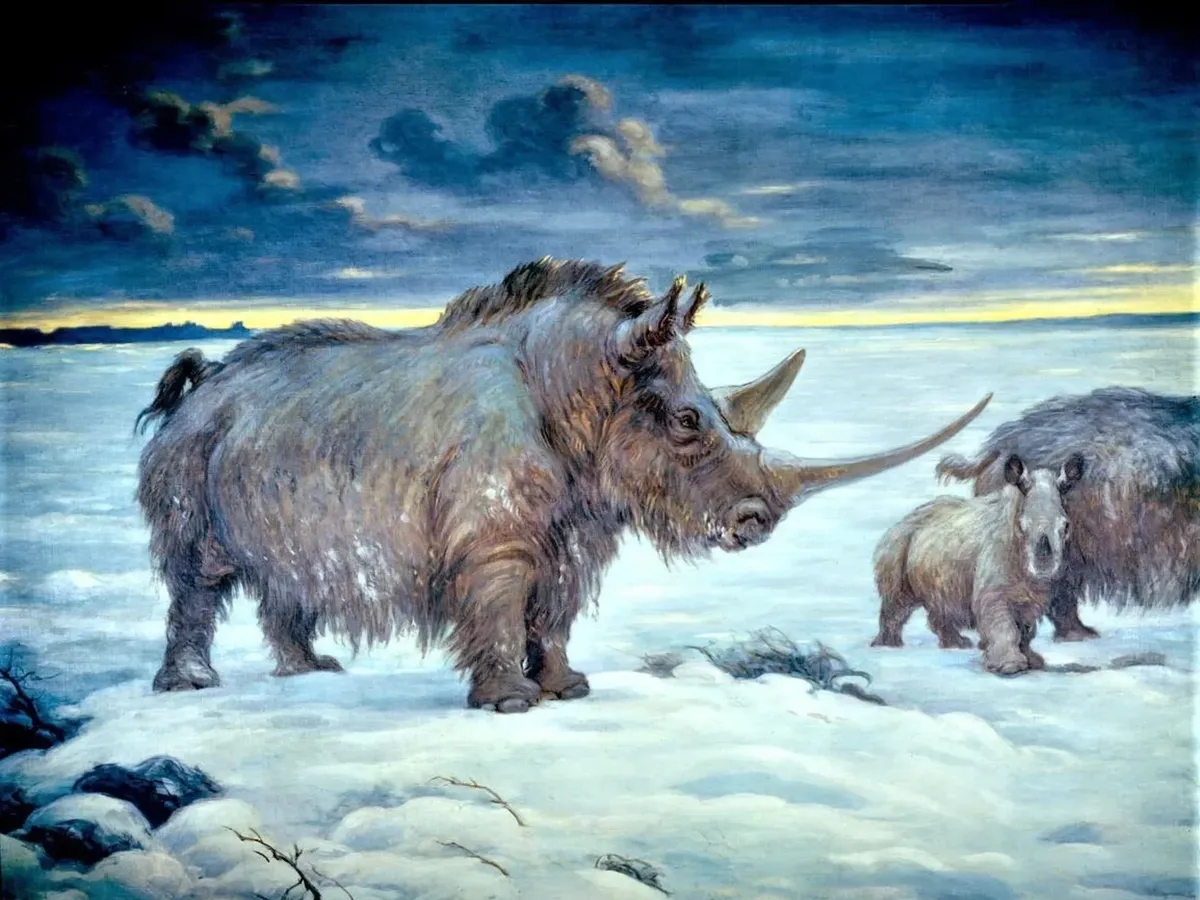
To Coelodonta antiquitatis, commonly known as the woolly rhino, fans, this story may sound all too familiar. A close relative of Merck’s rhino, the woolly rhino had two nose horns, including a very long front horn. They also had shaggy coats, perfect for ice age winters in Eurasia. We know a lot about the woolly rhino, and it is deservedly one of the most iconic ice age animals. Beyond the fossils, cave paintings of the majestic beings have been found. And much like the famous woolly mammoth, frozen, mummified rhinos (some hairy!) have been found in Siberia.
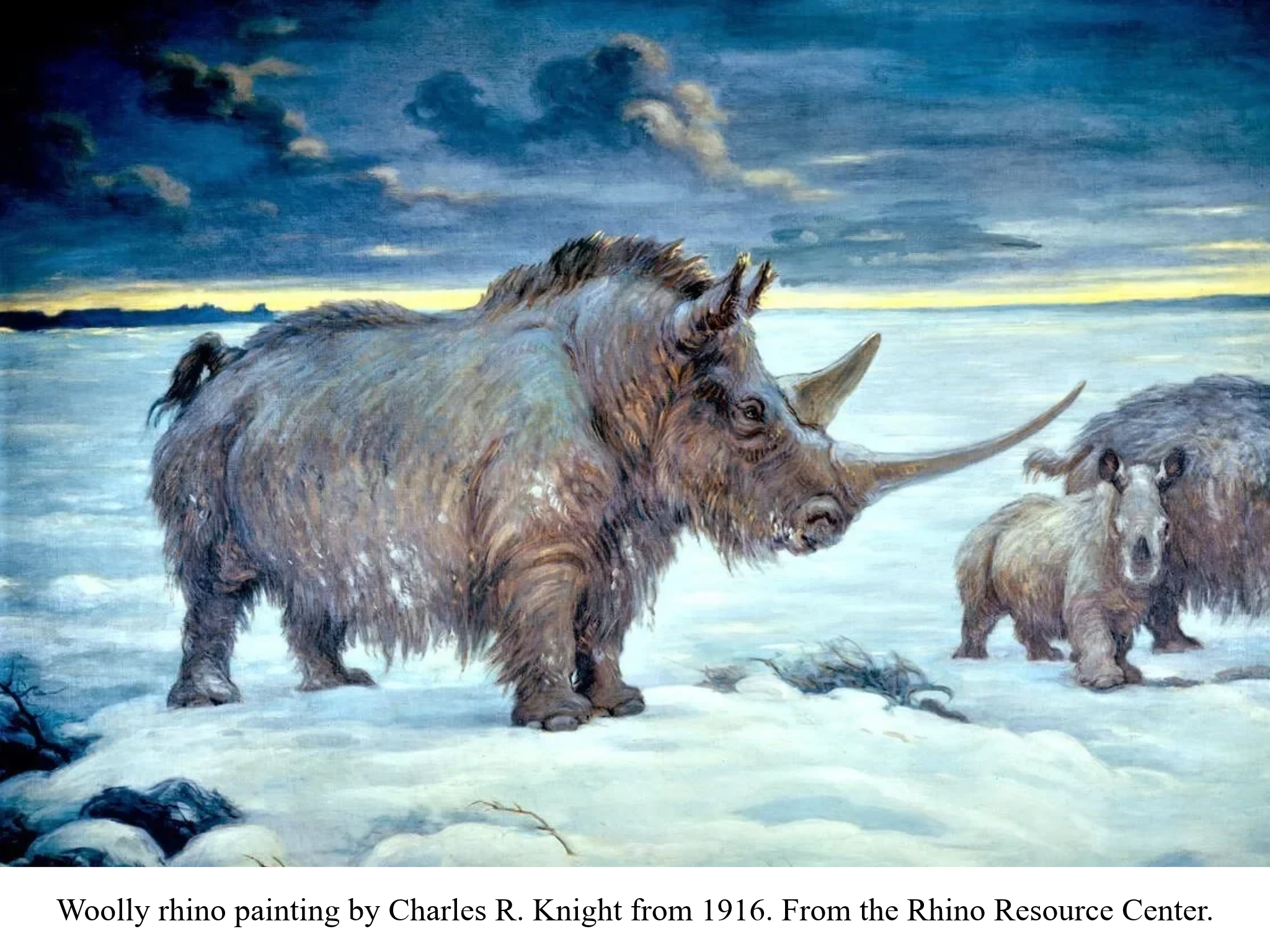
Back then, they inhabited grasslands all throughout Eurasia, both in extreme cold and slightly more temperate conditions. The grassland preference is what allowed woolly rhinos to persist and even thrive while the Merck’s rhinos were going extinct. The new environments ushered in a unique assembly of animals including the extinct woolly mammoths, cave lions, and steppe bison and the still-alive reindeer, wolves, and even humans. In fact, woolly rhinos seemed to play an important, or at least prevalent, role in our early ancestors. Cave paintings by our early ancestors heavily feature the beasts, even as far back as 33,000 years ago in France.
Unfortunately, much like the Merck’s rhino, a rapidly changing climate doomed the woolly rhino. As the ice age came to an end, the specializations that made them so successful in the cold would have hindered them. An already-weakened population may have been pushed into extinction by over-hunting by humans. The two forces worked in tandem to bring about the end of one of the most iconic prehistoric mammals.
While the world lost an amazing mammal with the extinction of the woolly rhino, we are fortunate enough to still have five unique species alive today. However, even these are in peril. Take the woolly rhino’s closest living relative, the Sumatran rhino, for instance.
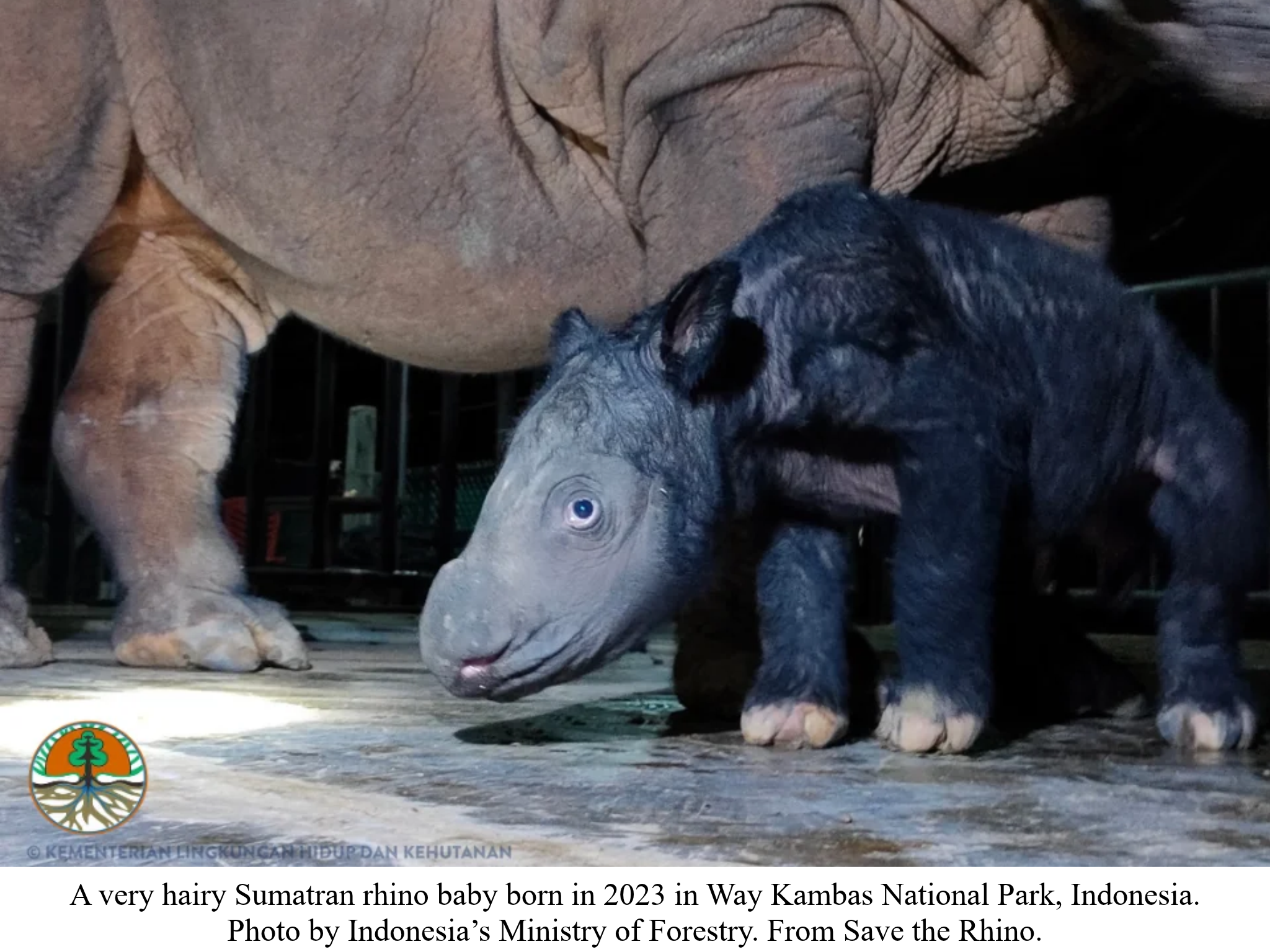
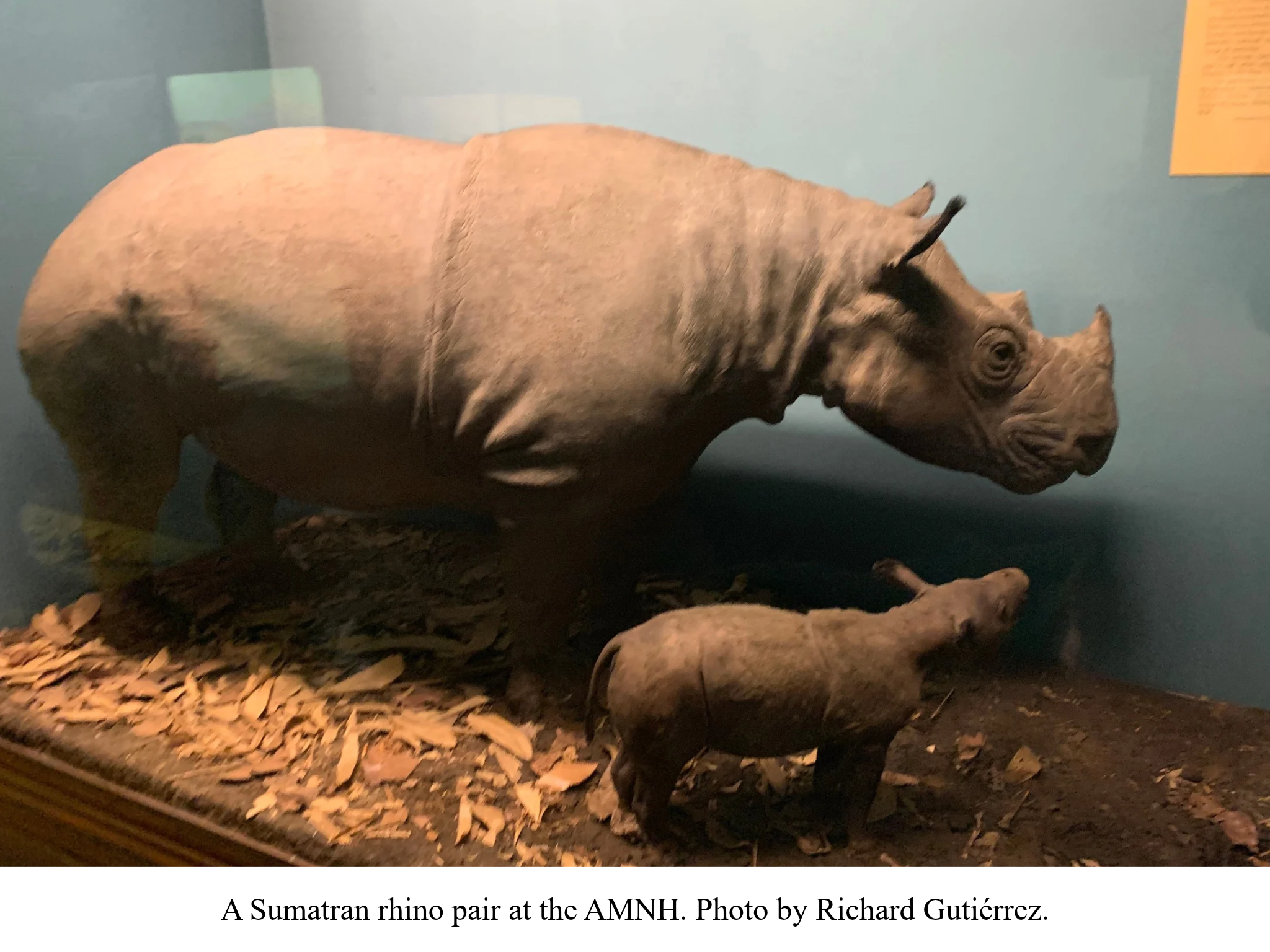
As the name suggests, Sumatran rhinos, Dicerorhinus sumatrensis, are found in Sumatra. They can additionally be found in other Indonesian islands, but at critically low numbers. In fact, the species is estimated to have under 80 individuals left, all in fragmented populations not unlike the fragmentation that occurred to the Merck’s and woolly rhinos. The Sumatran rhino can be further divided into three distinct subspecies, but the Northern subspecies has already likely gone extinct. Massive efforts are needed to protect the individuals we still have. Sumatran rhinos are the smallest living rhino species, with a maximum weight of “only” 1 ton (2000 lbs or 900 kg) and shoulder height of 3-5 feet (1-1.5 m). They are also known to be hairy, exposing their woolly connections.
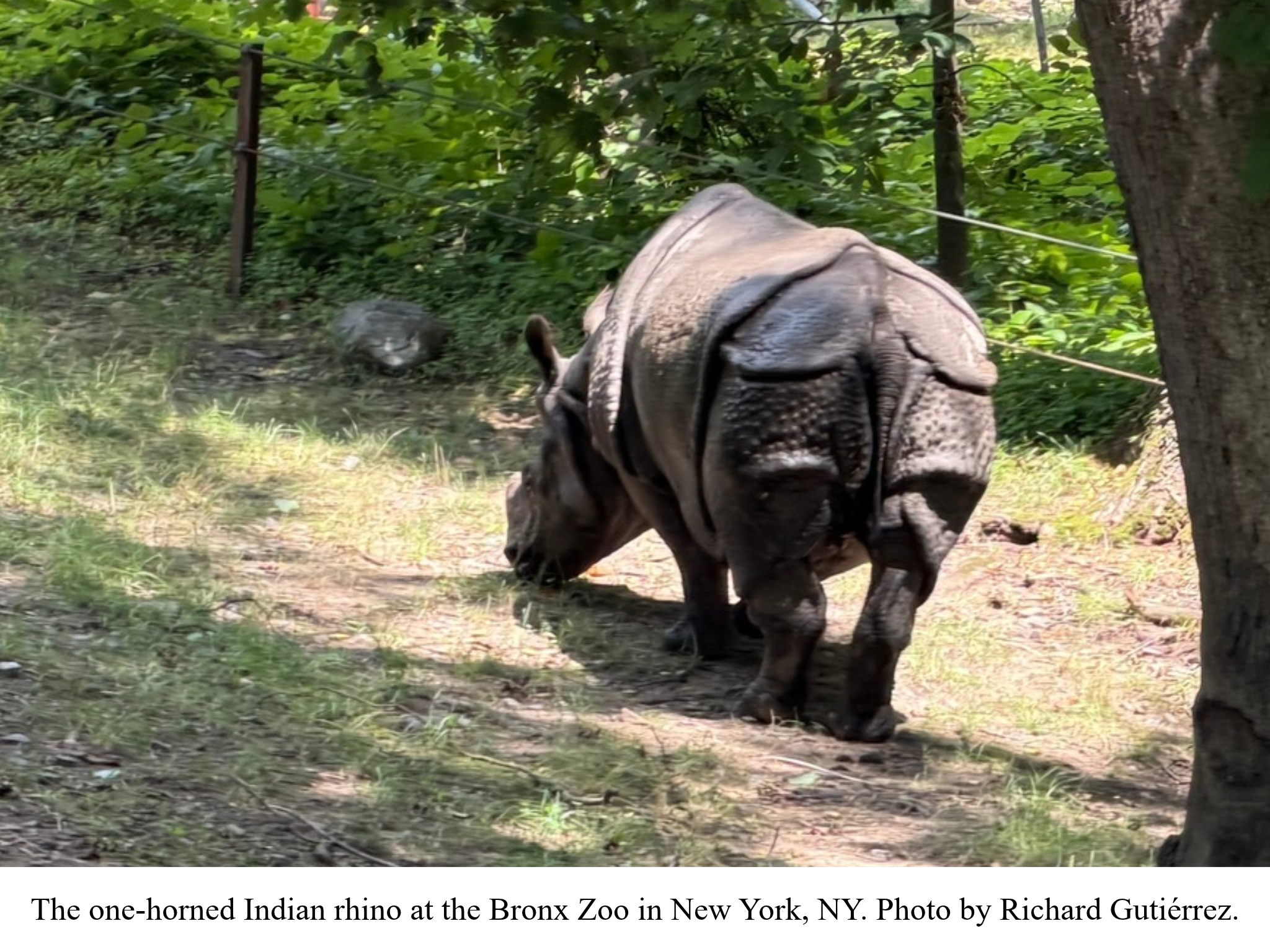
The next two living species are also found in Asia and belong to the same genus: the Indian rhino (Rhinoceros unicornis), also called the greater one-horned rhino, and the Javan rhino (R. sondaicus). The Javan species, unfortunately, has a very similar story to the Sumatran rhino. Only around 50 individuals remain, all found in one national park in Java, Indonesia. Luckily, while still vulnerable, the Indian rhino has a much larger population totaling up to 4,000. In Chitwan National Park, Nepal, the numbers have septupled over the last 50 years, from around 100 to nearly 750. This boon has also increased the prevalence of rhino-human interactions, which may not always end well. The nearby village of Sauraha has embraced the beasts, which often walk right through town. However, further education efforts must be made in areas with rhinos and other animals to protect both the animals and the people who live there. Both of these species are known for their thick, armor-like skin and for having only one horn rather than two.
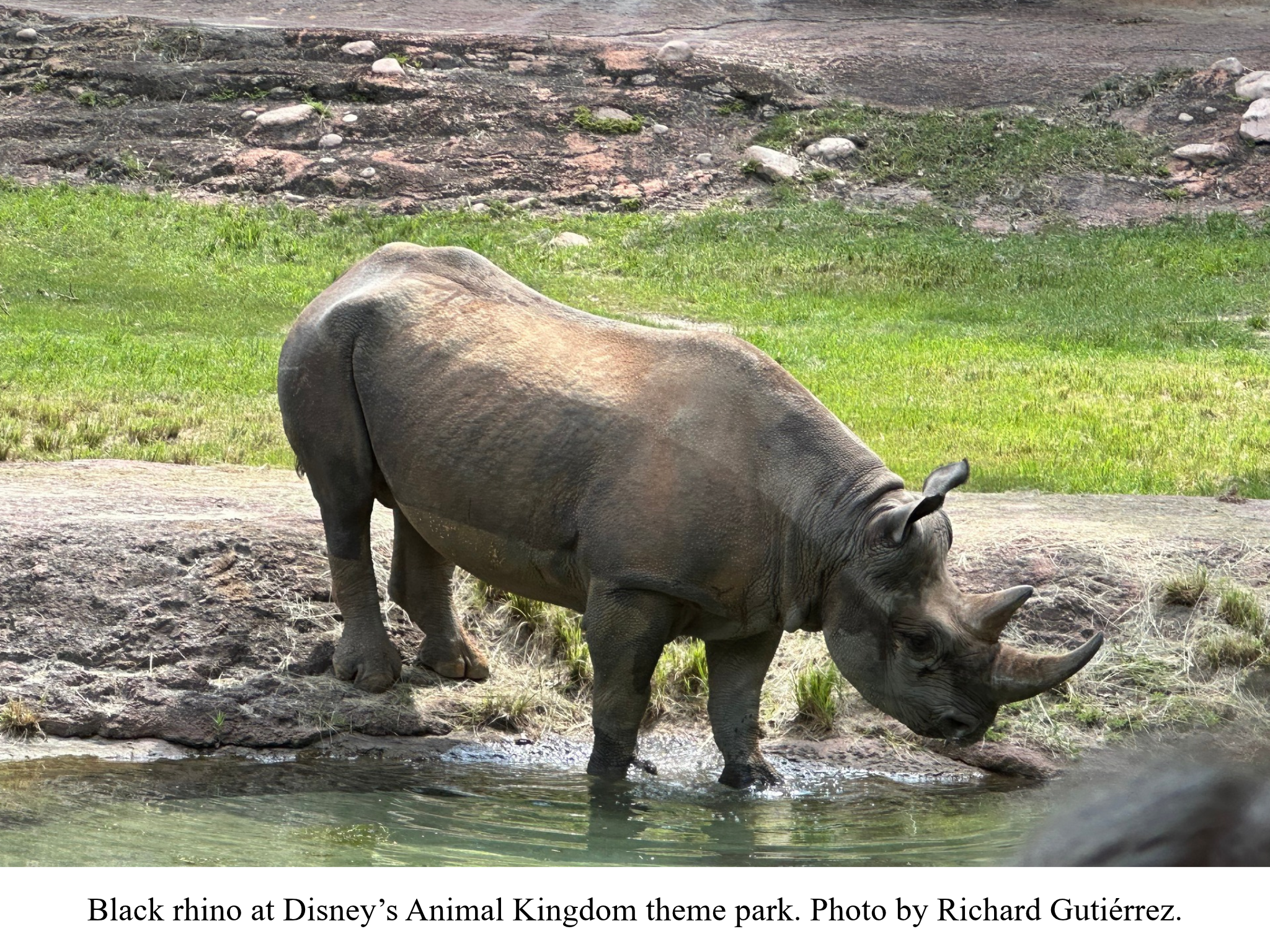
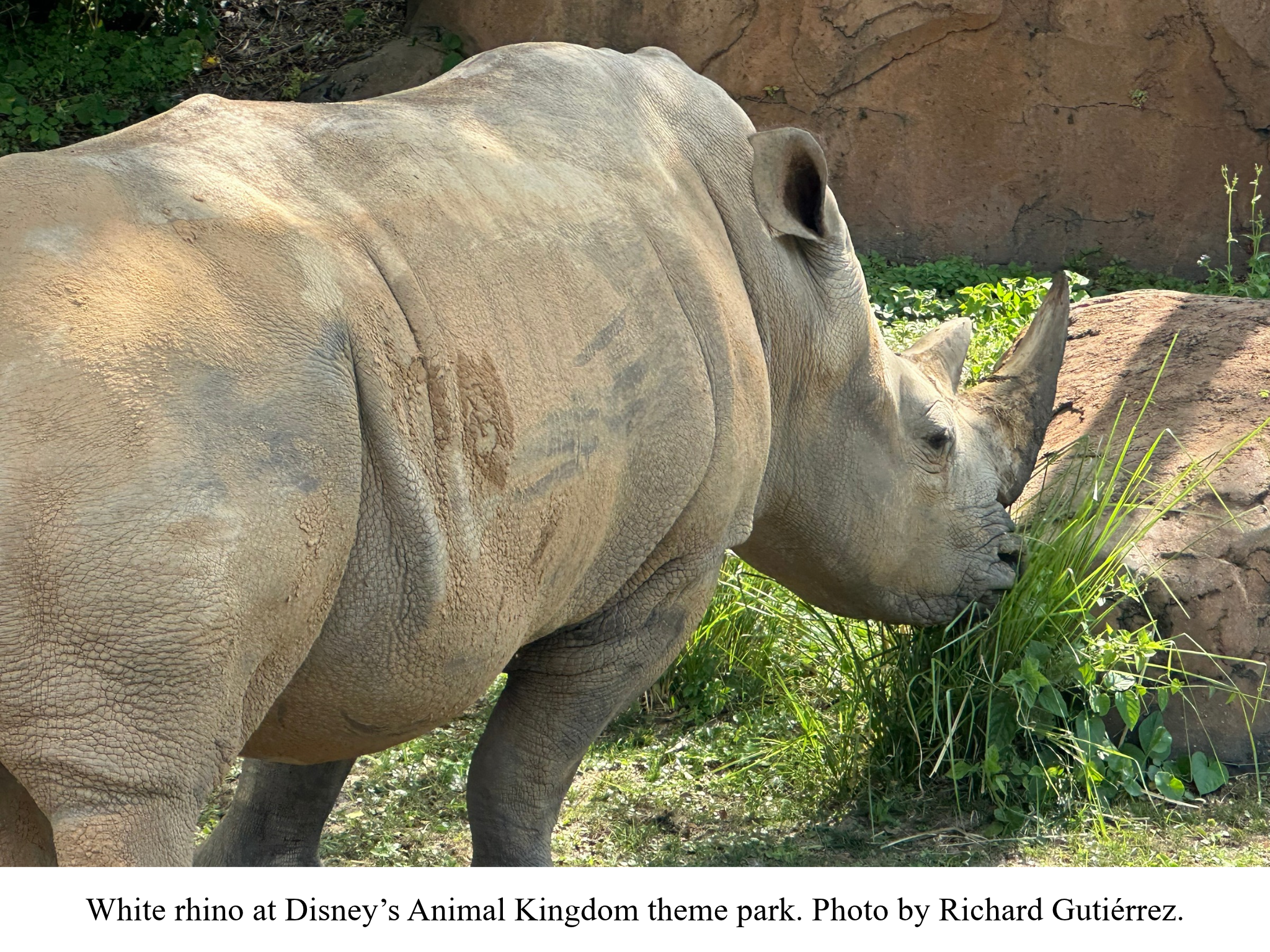
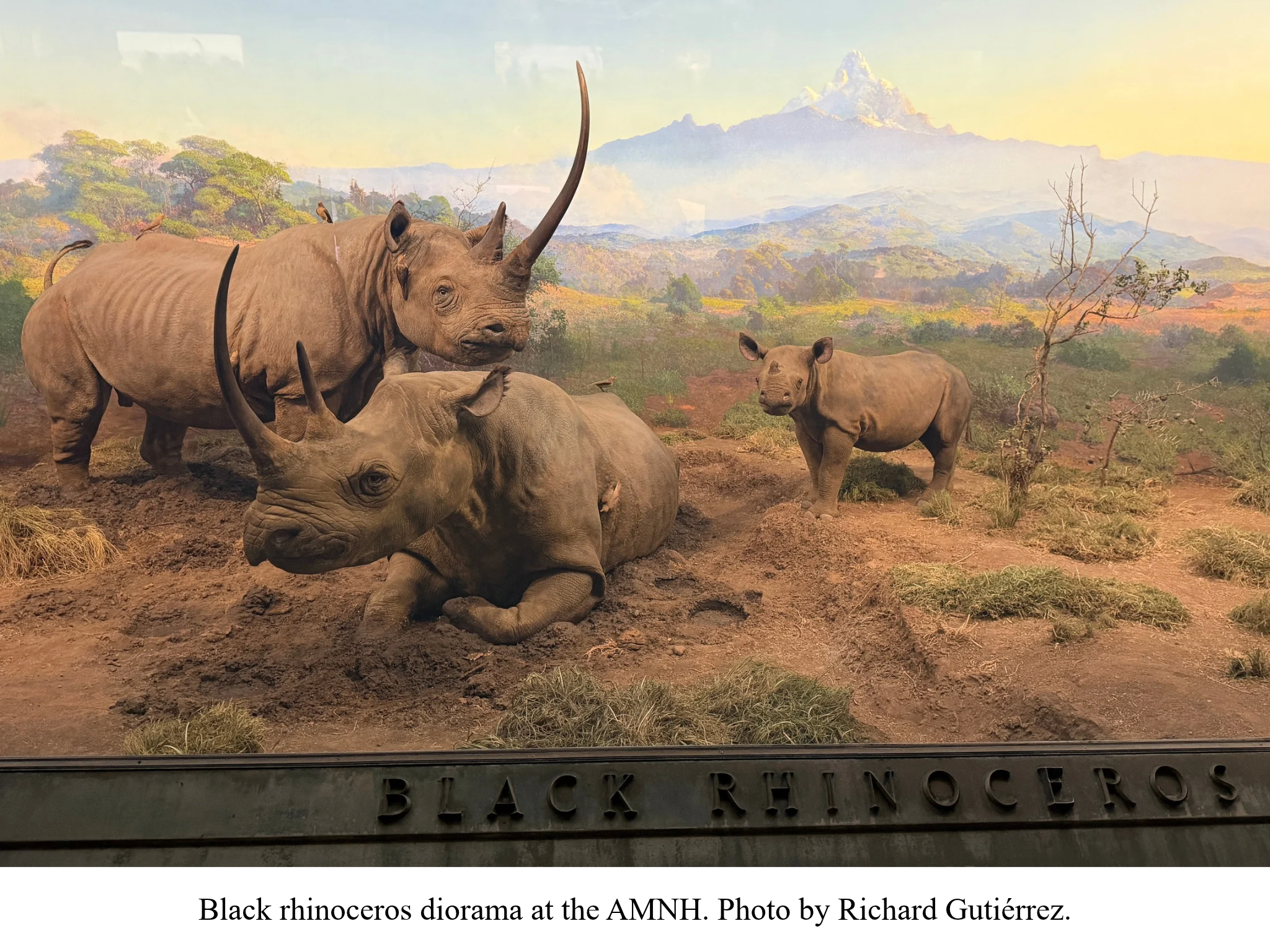
Finally moving to Africa we find the black rhino (Diceros bicornis) and white rhino (Ceratotherium simum). While their common names talk about colors, they are actually very similar in shade and color alone cannot identify each species. Black rhinos have a prehensile lip that has a hooked shape, perfect for grasping leaves. White rhinos, meanwhile, possess wide, square-shaped snouts made for grazing. They also differ slightly in head shapes.
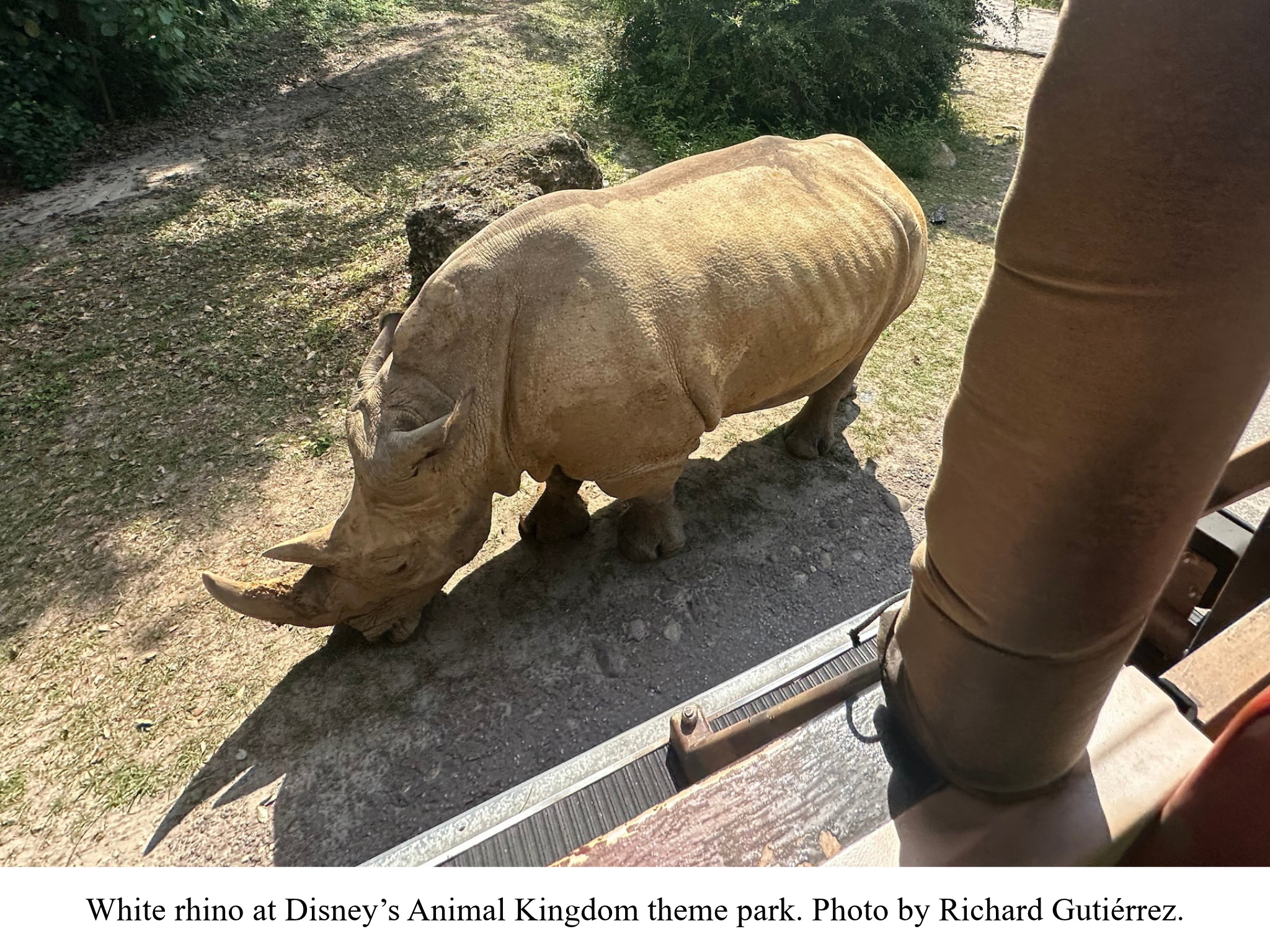
Black rhinos are critically endangered with just under 7,000 individuals left in Africa. Four subspecies were known, but the western black rhino was declared extinct in 2011. The white rhino, as a species, is rated as near threatened with a little less than 16,000 individuals. However, the northern subspecies only has two living individuals, both of whom are female. As such, it is only a matter of time until the subspecies goes extinct. While these two species have higher overall numbers than the three Asian species, it is important to protect these magnificent beasts.
The planet has already lost so many rhino species in the last tens of thousands of years, and all five of the living species are also at risk. Habitat destruction and population fragmentation has severely hindered the living Asian species, while poaching has long caused great harm to the two African rhinos. Laws protecting these amazing creatures have helped, but there is still much work to do if we want to ensure that future generations will be able to enjoy seeing and learning about these unique animals. While the woolly rhino may be long gone, its cousins will hopefully live on and prosper to preserve one of the most iconic of all mammal groups.
References
Bocherens, Hervé, et al. “Isotopic Evidence for Diet and Subsistence Pattern of the Saint-Césaire I Neanderthal: Review and Use of a Multi-Source Mixing Model.” Journal of Human Evolution, vol. 49, no. 1, July 2005, pp. 71–87, https://doi.org/10.1016/j.jhevol.2005.03.003.
Delano, James. “‘They Come Right Past the House’: Learning to Live With Rhinos as Numbers Soar in Nepal.” The Guardian, The Guardian, 21 Apr. 2026, www.theguardian.com/environment/2026/apr/21/rhinos-on-the-high-street-human-wildlife-conflict-nepal-aoe.
Deng, Tao, et al. “A Bizarre Tandem-Horned Elasmothere Rhino From the Late Miocene of Northwestern China and Origin of the True Elasmothere.” Chinese Science Bulletin, vol. 58, no. 15, Dec. 2012, pp. 1811–17, https://doi.org/10.1007/s11434-012-5574-4.
Fordham, Damien A., et al. “52,000 Years of Woolly Rhinoceros Population Dynamics Reveal Extinction Mechanisms.” Proceedings of the National Academy of Sciences, vol. 121, no. 24, June 2024, https://doi.org/10.1073/pnas.2316419121.
International Rhino Foundation. “Black Rhino.” International Rhino Foundation, International Rhino Foundation, 1 Oct. 2020, rhinos.org/about-rhinos/rhino-species/black-rhino/.
———. “Javan Rhino.” International Rhino Foundation, International Rhino Foundation, 29 Sept. 2020, rhinos.org/about-rhinos/rhino-species/javan-rhino/.
———. “Sumatran Rhino.” International Rhino Foundation, 29 Sept. 2020, rhinos.org/about-rhinos/rhino-species/sumatran-rhino/.
———. “White Rhino.” International Rhino Foundation, 29 Sept. 2020, rhinos.org/about-rhinos/rhino-species/white-rhino/.
Kirillova, I. V., et al. “On Time and Environment of Stephanorhinus Kirchbergensis Jäger 1839 (Mammalia, Rhinoceratidae) in Altai and Northeastern Russia.” Biology Bulletin, vol. 48, no. 9, Dec. 2021, pp. 1674–87, https://doi.org/10.1134/s1062359021090077.
Kosintsev, Pavel, et al. “Evolution and Extinction of the Giant Rhinoceros Elasmotherium Sibiricum Sheds Light on Late Quaternary Megafaunal Extinctions.” Nature Ecology & Evolution, vol. 3, no. 1, Nov. 2018, pp. 31–38, https://doi.org/10.1038/s41559-018-0722-0.
Liu, Shanlin, et al. “Ancient and Modern Genomes Unravel the Evolutionary History of the Rhinoceros Family.” Cell, vol. 184, no. 19, Aug. 2021, https://doi.org/10.1016/j.cell.2021.07.032.
Lu, Xiao-Kang, et al. “Reconstructing the Phylogeny of the Hornless Rhinoceros Aceratheriinae.” Frontiers in Ecology and Evolution, vol. 11, no. 1005126, Feb. 2023, https://doi.org/10.3389/fevo.2023.1005126.
Mihlbachler, Matthew C. “Demography of Late Miocene Rhinoceroses (Teleoceras Proterum and Aphelops Malacorhinus) From Florida: Linking Mortality and Sociality in Fossil Assemblages.” Paleobiology, vol. 29, no. 3, 2003, pp. 412–28, https://doi.org/10.1666/0094-8373(2003)029.
Ponomarev, D. V., et al. “The Northernmost Discovery of Merck’s Rhinoceros Stephanorhinus Kirchbergensis (Jäger, 1839) in Europe (Vazhgort, Komi Republic, Russia).” Paleontological Journal, vol. 60, no. 1, Feb. 2026, pp. 101–14, https://doi.org/10.1134/s0031030125601306.
Rafferty, John P. “Woolly Rhinoceros.” Encyclopædia Britannica, 2020, www.britannica.com/animal/woolly-rhinoceros.
Stepanchuk, V.N, and Moigne, A.-M. “MIS 11-Locality of Medzhibozh, Ukraine: Archaeological and Paleozoological Evidence.” Special Issue: The Hoslteinian Period in Europe (MIS 11-9), vol. 409, July 2016, pp. 241–54, https://doi.org/10.1016/j.quaint.2015.09.050.
Stuart, Anthony J., and Adrian M. Lister. “Extinction Chronology of the Woolly Rhinoceros Coelodonta Antiquitatis in the Context of Late Quaternary Megafaunal Extinctions in Northern Eurasia.” Quaternary Science Reviews, vol. 51, Sept. 2012, pp. 1–17, https://doi.org/10.1016/j.quascirev.2012.06.007.
Titov, V. V., et al. “The Experience in Reconstructing of the Head of Elasmotherium (Rhinocerotidae).” Russian Journal of Theriology, vol. 20, no. 2, Nov. 2021, pp. 173–82, https://doi.org/10.15298/rusjtheriol.20.2.06.
Photo sources:
https://www.savetherhino.org/impact/male-sumatran-rhino-born-in-the-way-kambas-rhino-sanctuary/
https://commons.wikimedia.org/wiki/File:Elasmotherium_sibiricum.png
https://rhinoresourcecenter.com/library/images/woolly-rhinoceros-in-winter-glacial-landscape/
https://commons.wikimedia.org/wiki/File:Stephanorhinus_kirchbergensis_Eemian_landscape.jpg