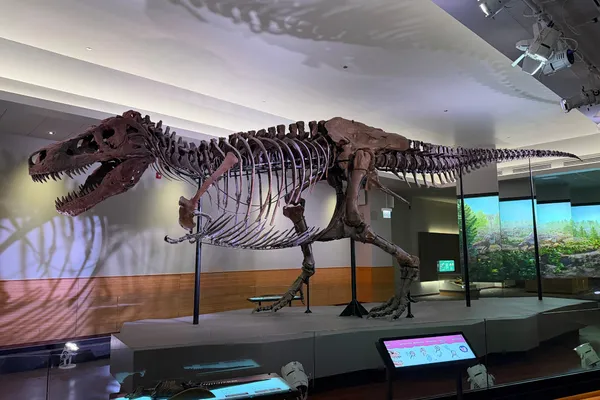
Hello, its Name is SUE!
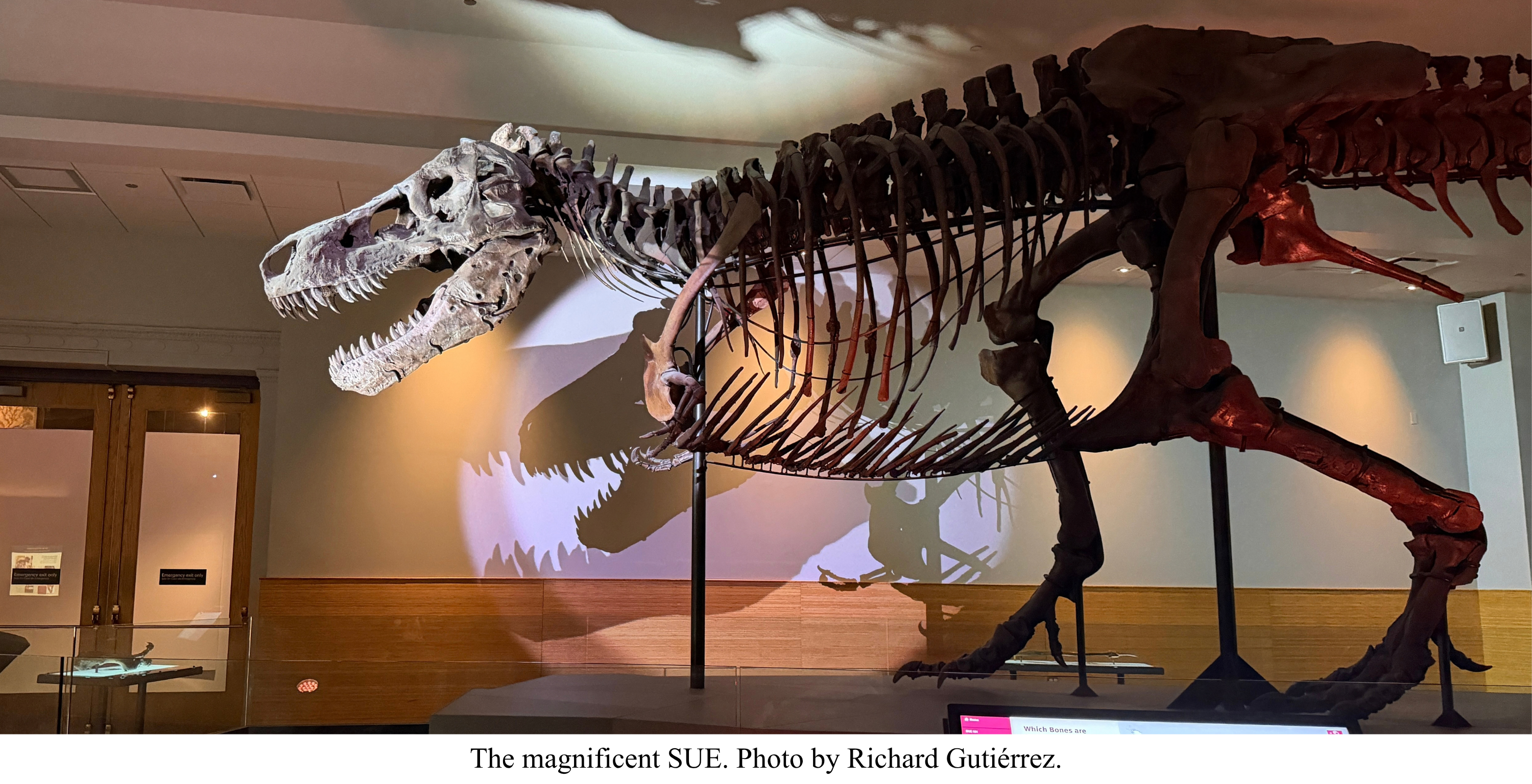
Many, many years ago, a very special Tyrannosaurus succumbed to an infection after a rough-and-tumble life. The magnificent beast was more than 30 years old and had grown to a length of over 40 feet (12 m). Luckily for us, it was likely rapidly covered in sediment, which allowed much of the skeleton to fossilize. Around 67 million years later, in 1990, Susan “Sue” Hendrickson unearthed our tyrant lizard in the South Dakota badlands, near the town of Faith. After a whirlwind legal dispute and record-setting auction, the T. rex, named SUE after the discoverer, is now on display at the Field Museum in Chicago, Illinois. There, the giant inspires countless visitors from around the world and is the subject of large swaths of important scientific research. But how did SUE live, and how do we know so much about it? What else do we still not have answers on? And most importantly, why is SUE so famous?!
SUE lived in a lush ecosystem filled with turtles, crocodilians, birds, fish, small mammals, and dinosaurs. All the way at the tail end of the Cretaceous, during the Maastrichtian age, the middle of the continent was covered in a shallow water body called the Western Interior Seaway. While more limited in area cover than it had been millions of years before, the water still created a bountiful, ecologically rich coastal area where SUE lived. As a top predator, it would have encountered dangerous prey items such as the “walking tank” Ankylosaurus, the three-horned Triceratops, and the massive Edmontosaurus. None of these would have been easy pickings, and SUE may have also had to contend with other T. rex! We know that it had some struggles in its life, as telltale signs were left behind in its bones.
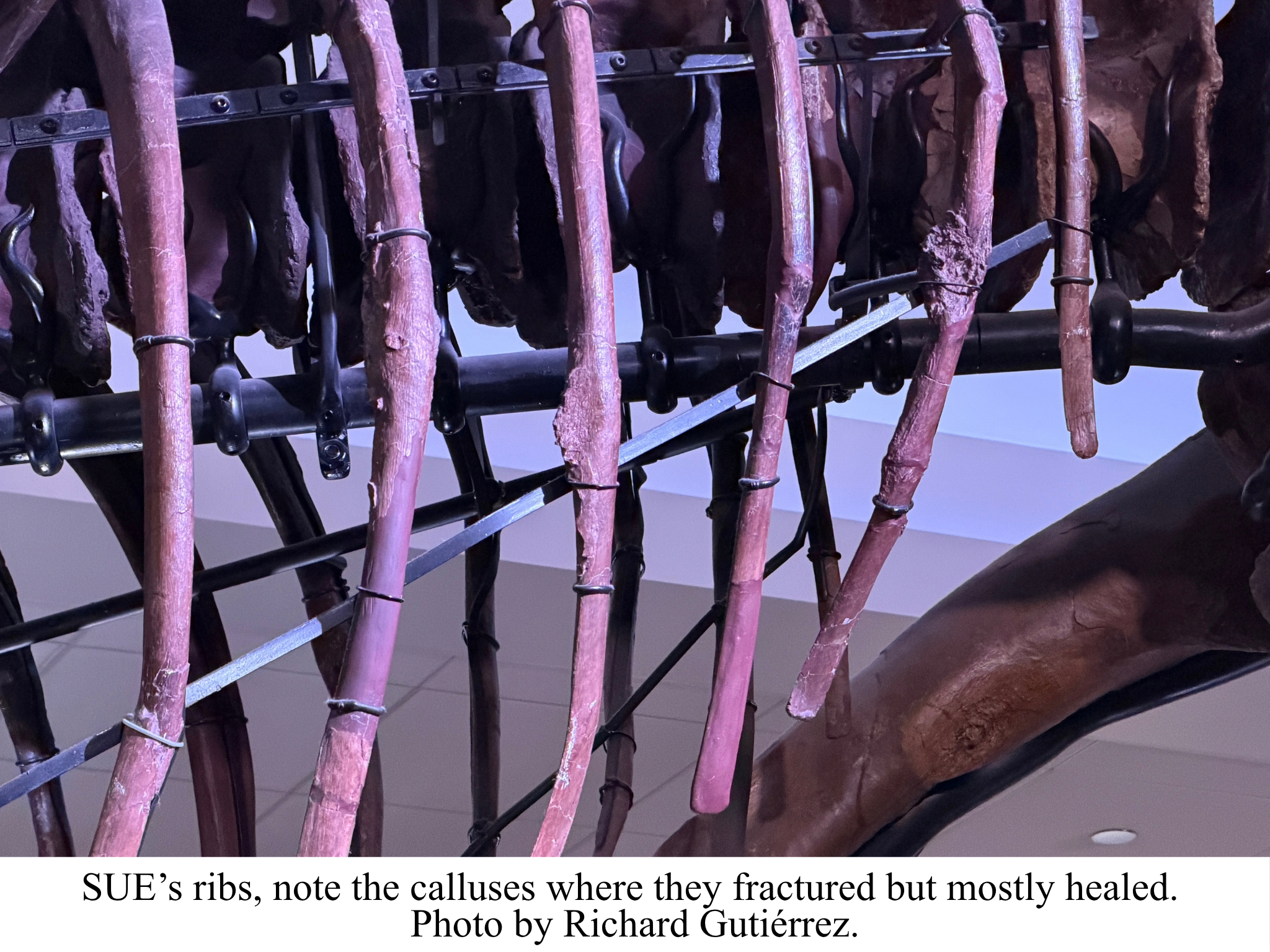
Take the animal’s ribs, for instance. Nine of SUE’s many found ribs showed signs of injury or disease. This sad truth is known from thick calluses on the bone, which are lumps that formed as they healed. Interestingly, almost all of them had recovered, which means that they did not cause SUE’s death. While we know these injuries occurred, we don’t know what caused them. Perhaps a dust-up with a 40-foot long Edmontosaurus caused some of the breaks, or maybe a simple fall off a mound.
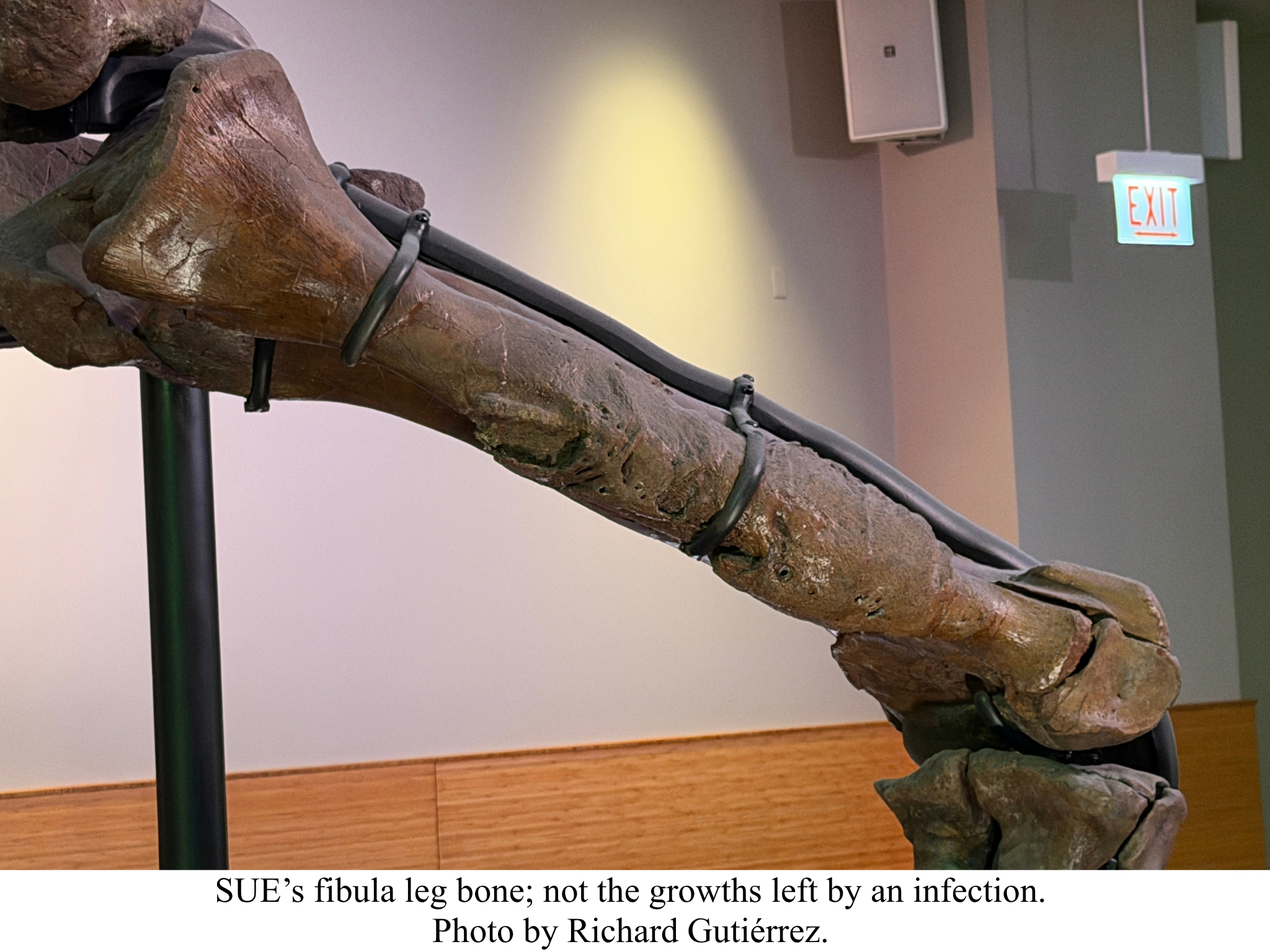
The injuries continue with a very painful-sounding arm injury. Based on some scarring on its right humerus, or upper arm bone, SUE likely had an injury where its muscle tore directly from the bone. Once again, there is no direct evidence, like any revealing tooth marks, so paleontologists cannot be certain as to what caused the wound. Moving further along its body, the left fibula, or lower leg bone, also shows signs of damage. It has very obvious growths that were likely from an infection. This was discussed by C.A. Hamm and colleagues in an interdisciplinary paleopathology study featuring paleontologists and radiologists who posited that the growth was osteomyelitis. Also called a bone infection, the disease was the result of an injury that didn’t heal properly. Once again, it is uncertain as to what may have been the cause, but I personally imagine it being from a run-in with an Ankylosaurus’ bony tail club. However, the Hamm study does mention that saliva is a common vessel for the movement of the pathogen. In any case, SUE likely limped as a result.
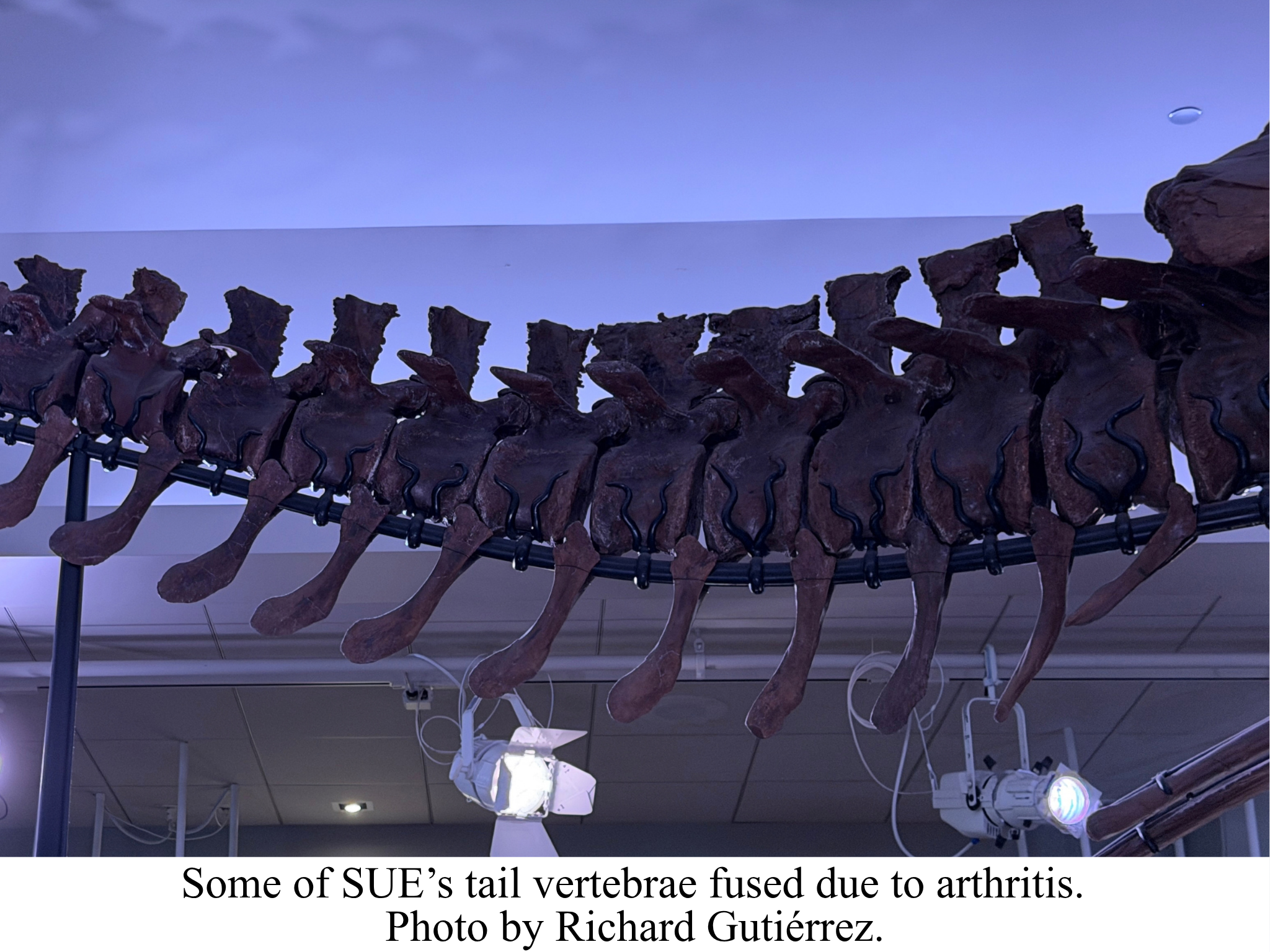
As if all of these hard knocks weren’t enough, SUE also showed signs of arthritis in the tail. Some of the tail bones were fused together, not unlike the arthritis that afflicts us humans. Sadly, this ailment likely caused extreme pain and a major decrease in the range of motion for the beast’s rear. Unlike the other injuries, though, the arthritis was just a symptom of SUE’s relatively old age.
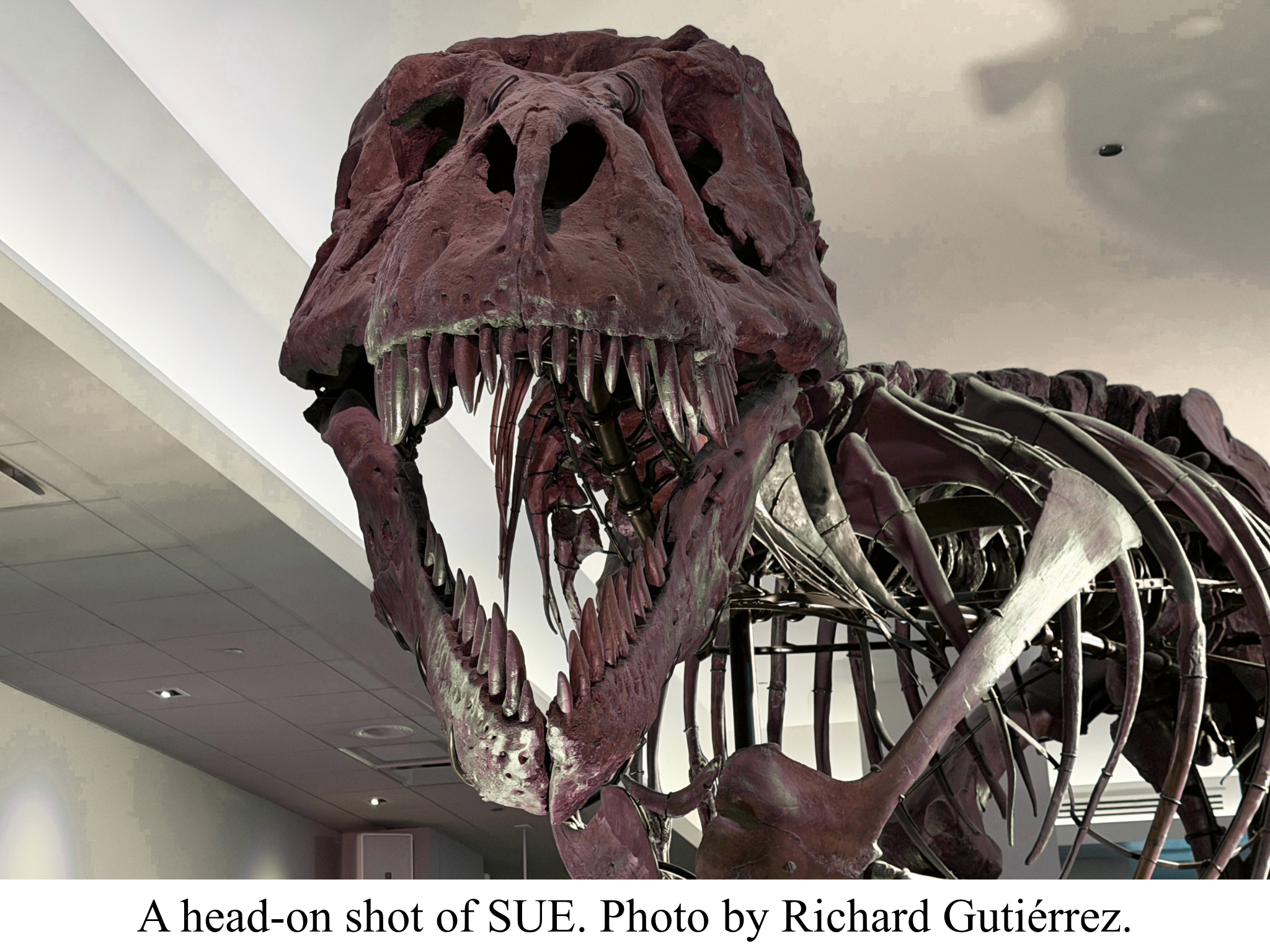
Finally, for the fossil’s last major signs of injury or disease, we arrive at its skull. While the massive head and foot-long teeth are the first things most eyes are drawn to, SUE also has some small holes covering its lower jaw. The common train of thought for many years was that the holes were the result of trichomoniasis, an infection caused by the single-celled parasite Trichomonas gallinae. This protozoan is still prevalent among extant dinosaurs, especially doves, pigeons, birds of prey, and house sparrows, where it can cause similar holes in the beak as in SUE’s skull. The result would have been a hugely painful mouth and jaw, which may have even caused the animal to eventually starve to death.
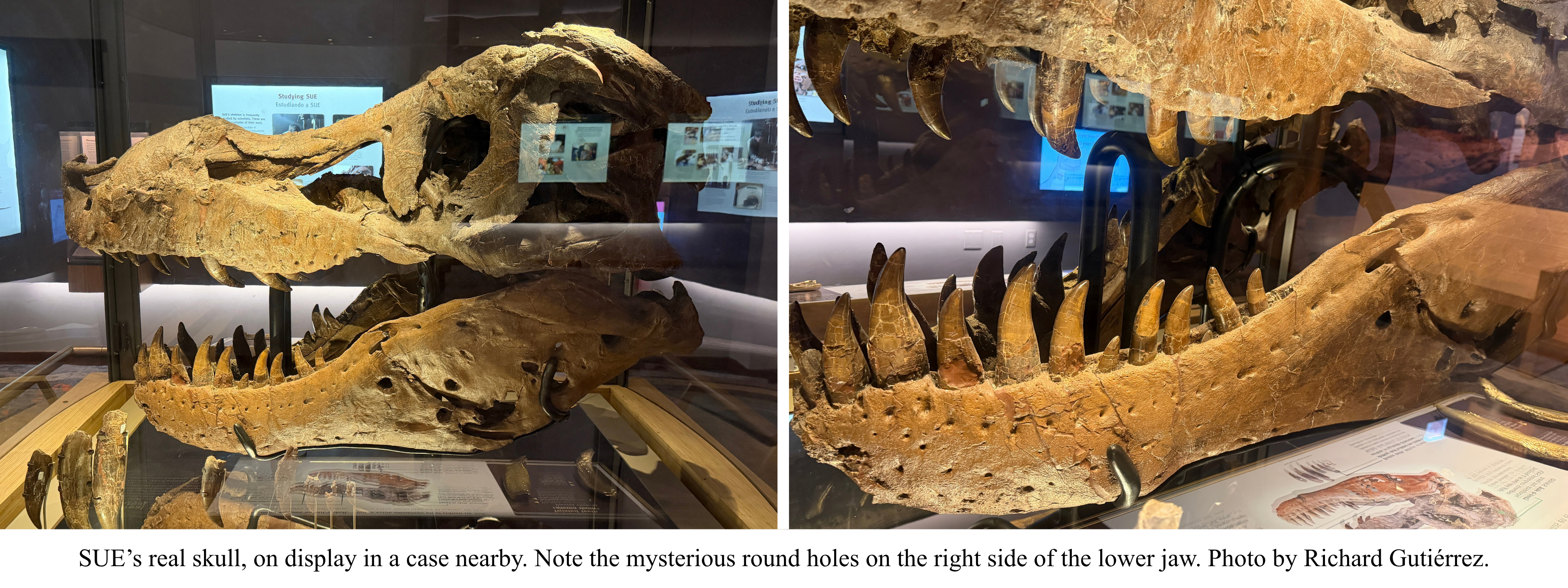
However, more recent analysis points away from the parasite paradigm. According to Bruce Rothschild, both a human doctor and a paleopathologist, and other researchers, the holes are inconsistent with “non-traumatic” bone alterations stemming from disease. In fact, the closest comparison that they could find were human trepanations, which is the intentional boring of holes into the skull as part of an ancient surgical technique. Tyrannosaurids have long been known for inflicting mouth bites on each other, something prevalent in Tyrannosaurus in particular. Some studies find that over 60% of T. rex skulls had bites from other T. rex. While not for sure, this newer research definitely points away from the usual parasite idea. Unlike bone lesions caused by disease, the small holes on SUE lack nodules, thickening, and depressions.
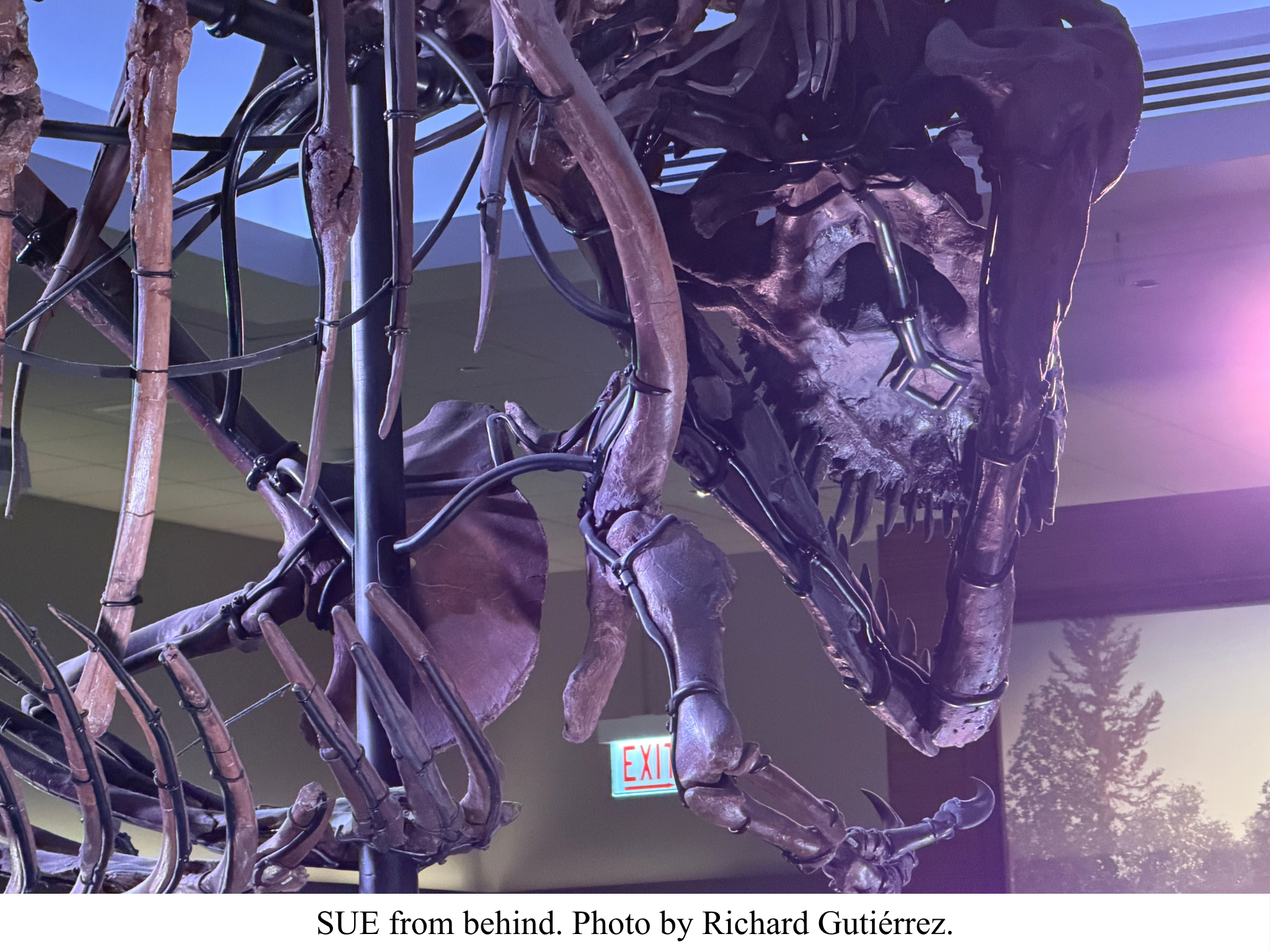
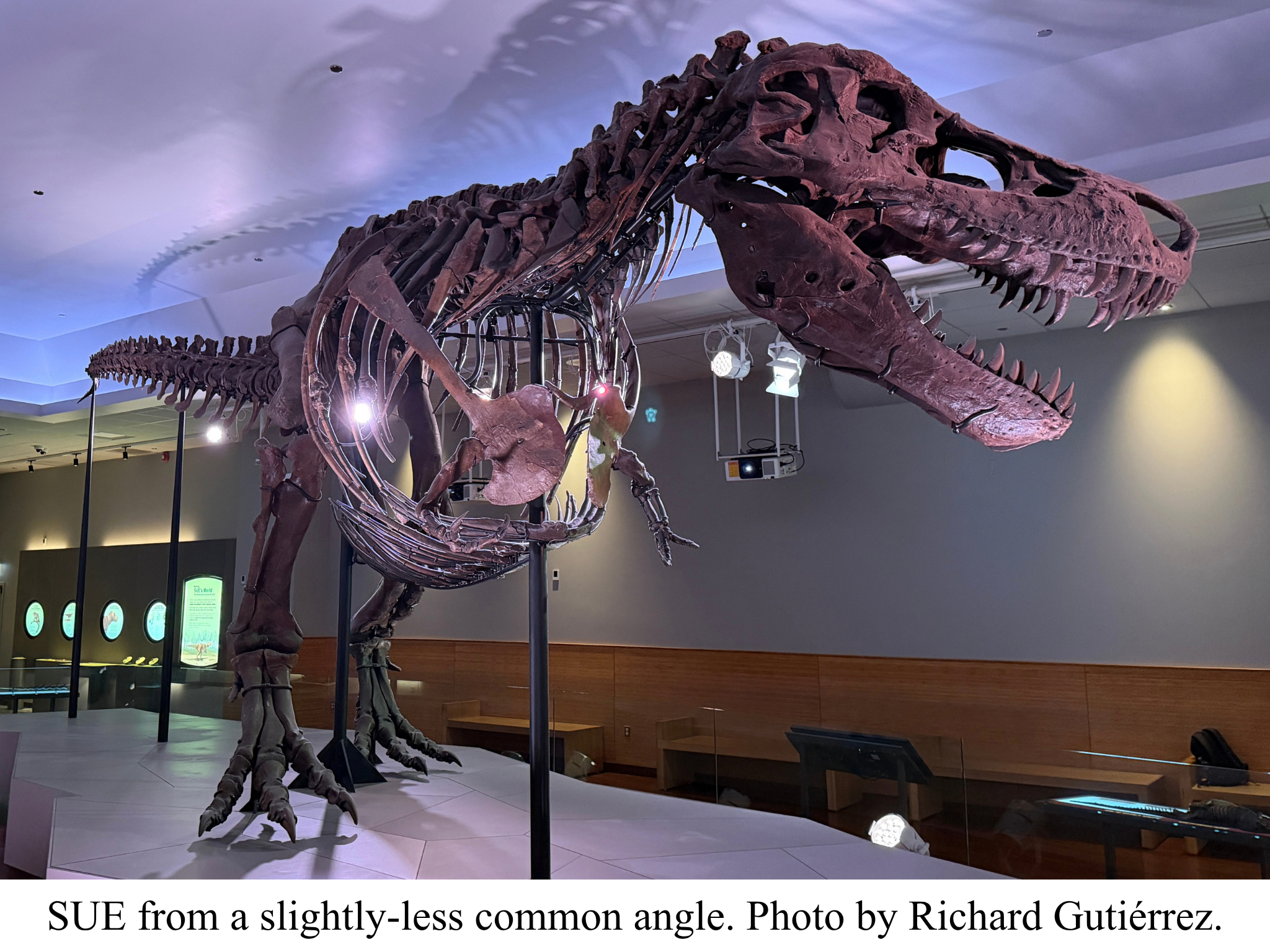
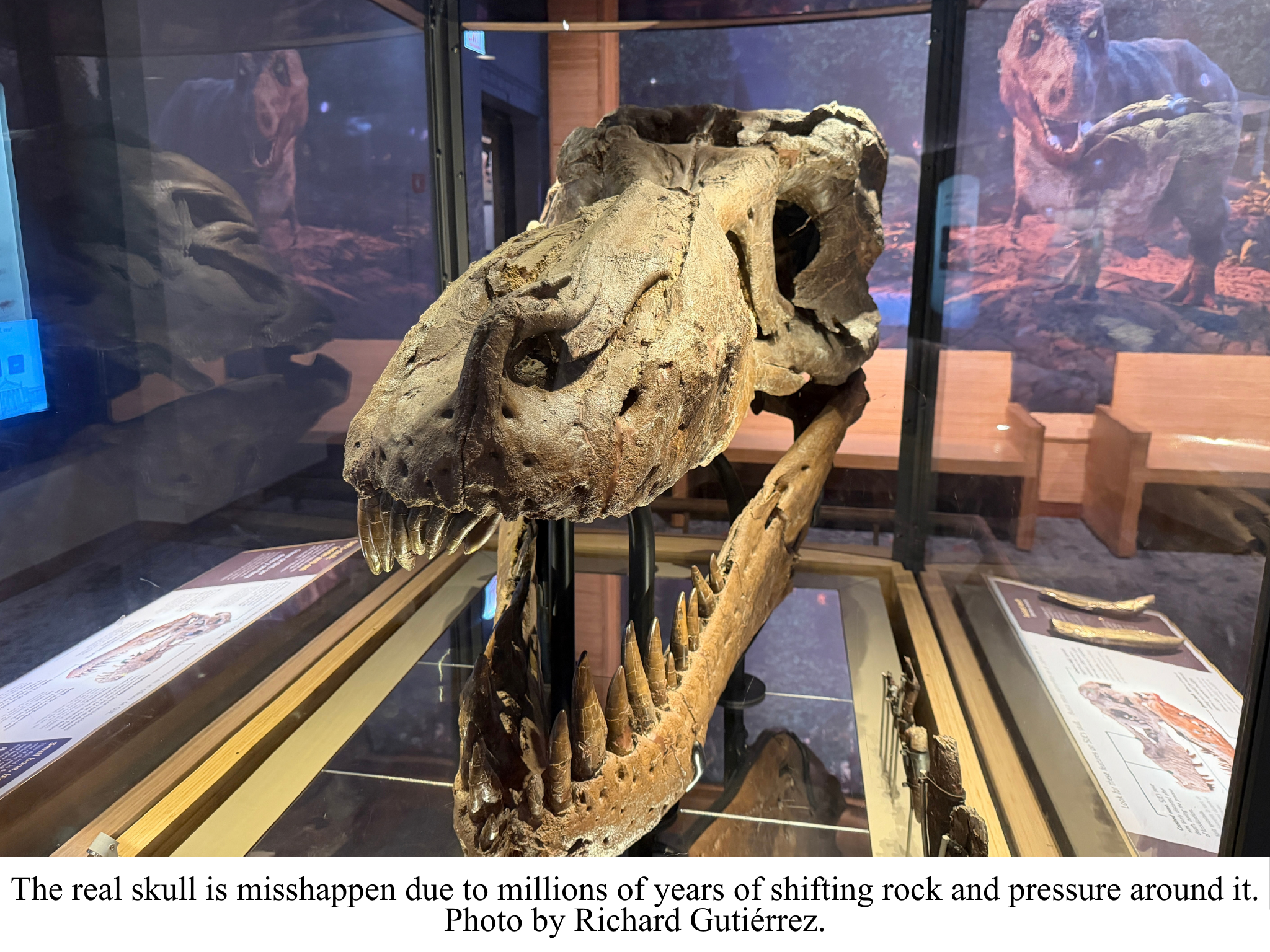
Now, besides these unique features, what else makes SUE so noteworthy? For one, SUE was the largest-known T. rex for many years at 42 feet (12.8 m) in length and an estimated 9-10 tons (18,000-20,000 lbs or ~8000-9000 kg) in weight. However, the “largest T. rex” crown may have recently been taken by another specimen named Scotty, which was ever so slightly larger. What Scotty was unable to take from SUE was arguably more important: completeness. By volume, SUE is roughly 90% complete; almost everything mounted is real fossilized bone! One major exception is its skull, which was unearthed but is displayed separately in a nearby case as it is often the subject of scientific study. Having such a high level of completion, especially for something as massive as a Tyrannosaurus, is nearly unheard of, making SUE truly spectacular.
Not all research involving SUE is well-received. A study in 2022 moved SUE into a new species, dubbed “Tyrannosaurus imperator,” or the tyrant lizard emperor. In the study, the authors believed that “T. imperator,” like SUE, was an earlier species that split into T. rex and “T. regina,” or the tyrant lizard queen. The immediate reaction was disbelief and scrutiny. Indeed, multiple scientific papers have been published in the years following to refute the split, and it has largely been ignored by paleontology. Today, the only valid Tyrannosaurus is still T. rex, which includes SUE. While ultimately unimportant, the attempt remains as an example of the importance of peer review and continued study of SUE and other fossils. There is still much to uncover about how SUE lived and looked like, even if there may be some falters along the way as new ideas gain more credence, like in the earlier case of its jaw holes.
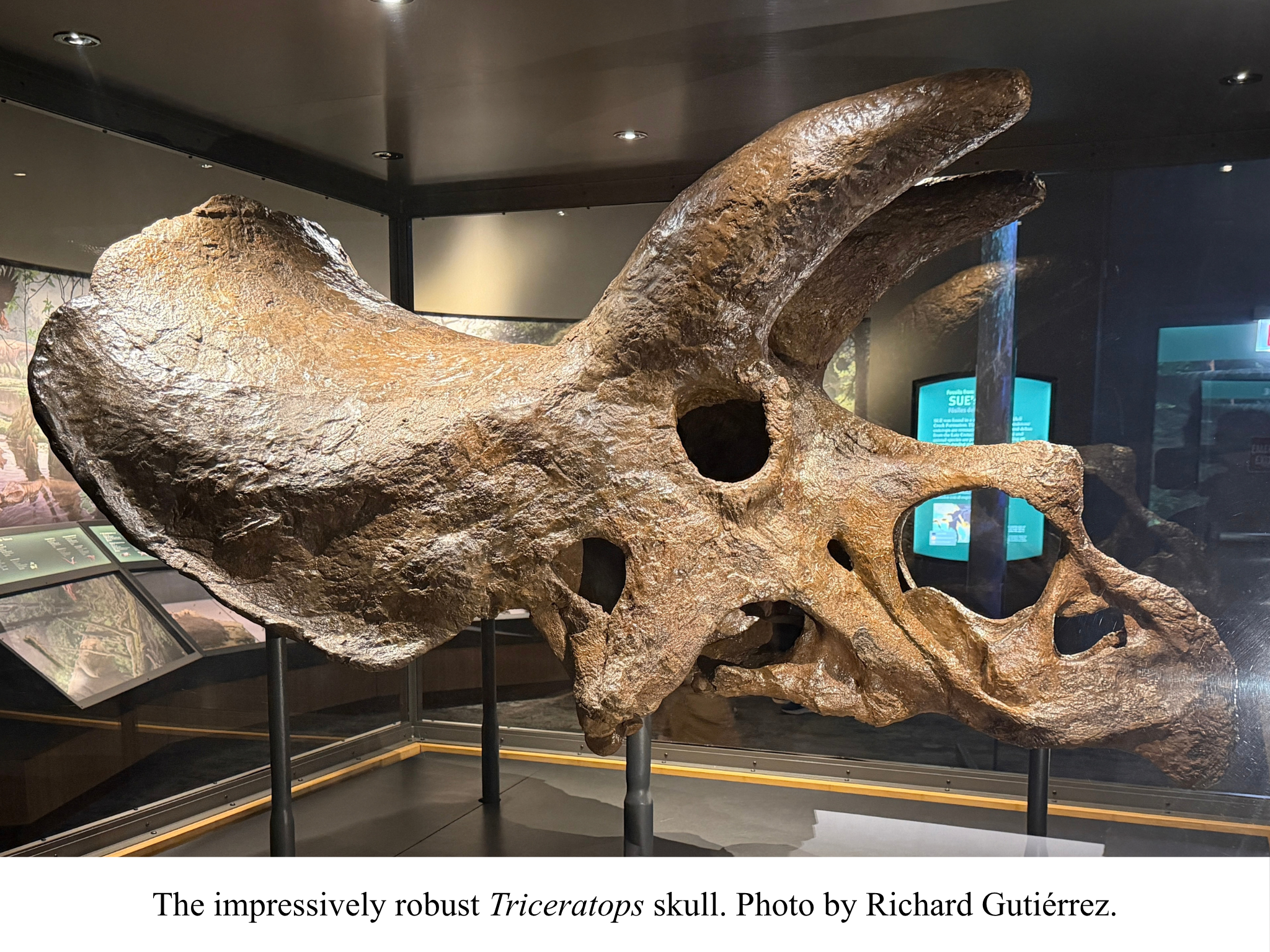
At the Field Museum, SUE stands proudly in its own exhibit room as part of the museum’s exceptional “Evolving Planet,” which takes guests through the history of life on Earth. The beautifully-preserved skull is the first part of SUE seen, complete with an artistic reconstruction of the animal in the same pose as the mount. Around the corner, you’re met with the sight of the gigantic beast. Well-positioned benches provide a nice spot to sit and take it all in. Further along is a video of SUE hunting hadrosaurs and specimens that illustrate how diverse the area that SUE lived in was, including an incredibly robust Triceratops skull. The display cases of fossils includes ornithopod bones, turtle shells, special plants, teeth, and other clues as to how SUE's environment really looked like. Most of the fossils on display were actually found right with SUE!
While we have already learned so much from SUE, there will always be new secrets to uncover through scientific research. Maybe one day, we’ll know if SUE was male or female, to what extent it really had feathers, and much more! If you have not seen SUE, add it to your bucket list. And if you ever wind up in Chicago, make it your mission to visit. SUE will surely capture your imagination as it has for millions of visitors since it was first mounted decades ago. Go!
P.S. You may be wondering why SUE's name is capitalized. I am unsure about the exact reason, but the Field Museum stylized the name as "SUE" all throughout the exhibit!
References:
Ashworth, James. “Controversial Paper Suggests There Are Three Tyrannosaurus Species.” Www.Nhm.Ac.Uk, 1 Mar. 2022, https://www.nhm.ac.uk/discover/news/2022/march/controversial-paper-suggests-there-are-three-tyrannosaurus-species.html.
Cleveland Clinic. “Osteomyelitis (Bone Infection).” Cleveland Clinic, 9 May 2024, https://my.clevelandclinic.org/health/diseases/osteomyelitis-bone-infection.
Cornell Wildlife Health Lab. “Avian Trichomonosis.” Cornell Wildlife Health Lab, 2026, https://cwhl.vet.cornell.edu/resource/avian-trichomonosis.
Hamm, C. A., et al. “A Comprehensive Diagnostic Approach Combining Phylogenetic Disease Bracketing and CT Imaging Reveals Osteomyelitis in a Tyrannosaurus Rex.” Scientific Reports [England], vol. 10, no. 1, Nov. 2020, PubMed Central, p. 18897, https://doi.org/10.1038/s41598-020-75731-0.
Rothschild, Bruce, et al. “Closer Examination Does Not Support Infection as Cause for Enigmatic Tyrannosaurus Rex Mandibular Pathologies.” Cretaceous Research, vol. 140, Dec. 2022, p. 105353, https://doi.org/10.1016/j.cretres.2022.105353.
SUE the T. rex. Field Museum, Chicago. Permanent exhibition.